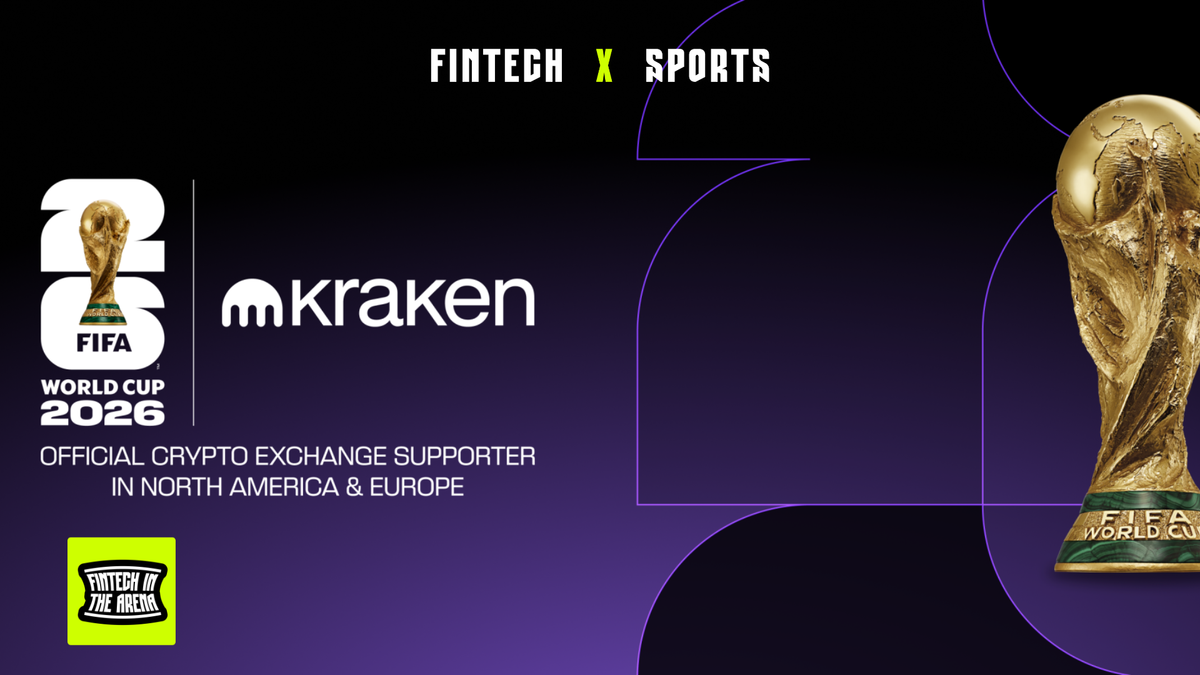
Inside Kraken and FIFA World Cup 2026 Sponsorship Deal
Kraken is FIFA's official crypto exchange partner for the 2026 World Cup. Here's what that means, how it works, and where it fits in the tournament's wider Web3 stack.
This series decodes the official sponsorship deals behind FIFA World Cup 2026. We covered Visa across two parts, unpacking its B2B2C fintech enablement model through partner case studies.
 Marcel
 Marcel
Today, the focus shifts to Kraken.
Fintech sponsorship in football tends to follow a collaborative pattern. Visa builds its World Cup presence around merchant networks, card issuers, and shared branding with FIFA's payment infrastructure. The relationship benefits multiple parties across the value chain. Crypto exchange sponsorship works on a different model entirely. These deals function as direct customer acquisition funnels, and the category runs on strict exclusivity. One exchange holds the door. Every fan who walks through it becomes a potential account.
Crypto.com held that exclusive position at Qatar 2022, using the tournament to build global brand recognition during the peak of the last crypto cycle. Kraken now holds it for 2026. FIFA announced Kraken as the Official Crypto Exchange Supporter of the FIFA World Cup 2026 on June 9, 2026, giving the exchange a direct line into the largest audience in FIFA's history, spread across the United States, Canada, and Mexico. The shift from Crypto.com to Kraken marks a change in exchange leadership, and it marks a change in strategy. Kraken enters this tournament with a plan built for a different market environment than the one Crypto.com faced in 2022.
From Brand Ego to Compliance and Utility
The 2021 to 2022 cycle rewarded scale and visibility above almost everything else. Crypto.com Arena carries the name from that period. FTX held a Major League Baseball stadium naming deal before its collapse forced the removal of its branding. These deals prioritized awareness at a size that matched the speculative capital moving through the industry at the time.
Kraken's 2026 approach reads differently. The exchange built its FIFA sponsorship around regulatory alignment and regional trust, particularly across jurisdictions with layered compliance requirements. Kraken Co-CEO Arjun Sethi framed the deal as a chance to show the world an open, borderless financial system language that points toward retail adoption rather than pure brand recall.
"Football is the one thing that moves the whole planet at once. Over seven weeks, six billion people will watch the same game, across every border and every language. Money should work the same way. Football has always crossed borders. So does crypto. For most ofhistory, the best markets were open only to the few. The FIFA World Cup 2026 is where we show everyone else what they've been missing: an open, borderless financial system that anyone can join with a phone in their pocket. This isn't a future concept. It's here."
What defines the 2026 approach:
- Regulatory alignment across three distinct markets: United States, Canada, Mexico
- Regional trust-building positioned as the entry point to retail adoption
- Compliance framed as the marketing message itself
- A slower, calculated build toward market share, replacing the naming rights spectacle of the last cycle
Physical Activation Across the 16 Host Cities
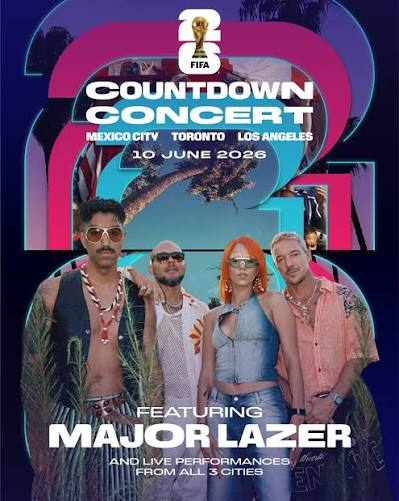
Kraken's execution centers on physical presence rather than digital advertising alone. The World Cup Countdown Concert Series launched on June 10, 2026, one day ahead of the opening match, with events across host cities including Los Angeles, Mexico City, and Toronto. The series gives Kraken a cultural entry point into each market before a single ball gets kicked.
The FIFA World Cup Countdown Concert Series featured simultaneous star-studded events across the three host nations: Canada, Mexico, and the United States. The synchronized musical experience, produced in collaboration with the Grammys®, featured a global lineup of fifteen artists:
- Toronto, Canada: Bryan Adams, Nora Fatehi with DJ Sanjoy, Vegedream, The Beaches, and a collaboration between AHI and Wyclef Jean.
- Mexico City, Mexico: Andrea Bocelli, Los Ángeles Azules with Belinda, and Elena Rose.
- Los Angeles, USA: Davido, and Diplo's Major Lazer featuring rapper BIA.
The concerts served as a major kickoff celebration ahead of the FIFA World Cup 2026, uniting football and music fans worldwide with broadcasts on TikTok and VuMe Live
That physical strategy extends across all 16 host cities through Kraken fan zones, which combine:
- Digital asset education booths
- Interactive fan challenges
- Access to localized, tournament-themed digital collectibles
The design favors high-touch onboarding over passive exposure. A fan who walks through an educational booth, completes a challenge, and claims a localized collectible leaves with a stronger connection to the brand than a fan who scrolls past an LED banner during a match broadcast. Stadium signage delivers impressions. Fan zones deliver account creation, and account creation carries far more value for a customer acquisition strategy than recognition alone.
This model treats the World Cup as sixteen separate onboarding events rather than one global campaign, with every fan zone calibrated to the regulatory and cultural conditions of its host city.
Commercial Exclusivity in the Sporting Economy
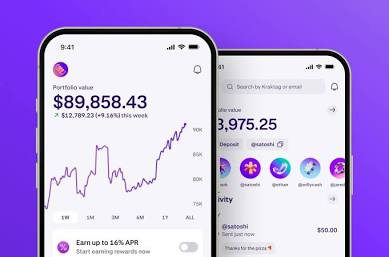
Kraken maintains absolute exclusivity over the primary fiat-to-crypto gateway at the tournament, a position that isolates the exchange from the collaborative backend integration common in traditional fintech sponsorships. That isolation gives Kraken a clean, uncontested onboarding pipeline.
What that exclusivity delivers:
- Full control over the entry point fans use to move fiat into digital assets
- No shared branding or co-marketing dilution with competing exchanges
- Direct exposure to trading volume spikes tied to tournament activity
As fan tokens and tournament-related digital assets see rising activity through the knockout stages, Kraken captures that volume directly. Being the sole trusted exchange at this scale of visibility positions Kraken as the central transactional hub for retail participants during the tournament's highest-engagement moments.
Mapping the Parallel Ecosystem: The Web3 Stack of the Tournament
Kraken's exclusivity covers one layer of a much wider Web3 stack running underneath the tournament. Kraken does not partner with other exchanges, yet it operates alongside specialized players who each own a distinct slice of the digital asset economy, resembling a vertical stack more than a single sponsorship.
The Web3 stack breaks down into three layers:
- Kraken — exclusive fiat-to-crypto gateway, owns onboarding and account creation
- ADI Predictstreet — official prediction market category partner, integrating directly into DAZN and partnering with Kalshi to bring prediction markets to fans following live match action
- Avalanche — powers backend infrastructure, including high-volume on-chain ticketing and digital collectables
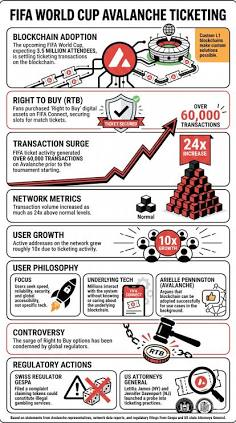
Predictstreet's layer sits apart from Kraken's function entirely, capturing engagement built around match outcomes and in-tournament events rather than account creation or asset custody. Avalanche's layer stays largely invisible to fans, since ticketing and collectibles run on blockchain rails without requiring fan awareness of the network behind them.
Three layers, three functions, one tournament. Each player commands its category on an exclusive basis, forming a structure that treats digital assets as specialized roles rather than one converged sponsorship.
The era of treating sports stadiums as giant billboards for crypto speculative mania has passed. Kraken's presence at the World Cup demonstrates how the industry is maturing toward practical utility, choosing to meet users directly where they gather rather than shouting from stadium LED screens. By anchoring their campaign in physical fan zones and regional regulatory trust, they are proving that the value of a multi-million dollar sports deal is no longer measured by the size of the logo, but by the efficiency of the onboarding pipeline it creates.
We cover all things FinTech X Sports. Subscribe to the newsletter to get the next deal decoded first >>
Comments ()