Edition 2 - August: Why is every football shirt suddenly fintech? 👀
The FinTech in the Arena Newsletter | Edition 2 asks a simple question: how did fintech end up on so many sports shirts? August has a few answers. 👀

Following the money behind the game >>
Edition 2 looks at the deals, partnerships and deeper stories that shaped August 2026 - and what they reveal about where fintech is finding value in sport.
Hey sports fanatic,
August was the month I started losing track of how many fintech logos were appearing on football shirts. 🤯
And I mean that literally.
There was eToro at Leeds, Circle and USDC at Chelsea, HALA at Al-Ahli, Equiti at Al Wahda, XTB at Porto, PensionBee at Saracens, Zilch at Cardiff City, Bitstack at Lens and RBC at Wrexham. Then Ebury showed up again, this time in connection with Fulham's €40m transfer move.
And that was just football.
There was NBA, NASCAR, the NFL, golf, cricket and plenty of payments activity around all of it.
I spent a lot of August looking at these deals individually, then started putting them next to each other. That's when things got more interesting. The logos might all sit inside the same sports environment, but the businesses behind them are often trying to do completely different things.
Some want attention. Some want customers. Some want access to businesses and wealthy clients. Some are putting the financial product itself into the partnership.
So, here's what caught my eye. 👀
📊 By the Numbers
⚽ 9+ football partnerships tracked across clubs and competitions
🏀 NBA Philippines added Salmon as a partner through the 2026/27 season
🏈 18 NFL teams are involved in the NFL Extra Points Credit Card programme on the American Express Network
💶 €40M Fulham transfer move supported by Ebury
🏎 1 new NASCAR credit card launched by Avant
🎯 The FITA Angle
⚽ Football shirts are becoming serious fintech real estate
What happened
August delivered a rather impressive collection of financial brands onto football shirts. eToro partnered with Leeds United and Leeds United Women, Circle put USDC on Chelsea's shirts, HALA took the upper-back position at Al-Ahli, while Equiti moved onto the front of Al Wahda's shirt. XTB became FC Porto's Official Investment Partner through 2029, PensionBee moved to the front of Saracens' shirt and Zilch joined Cardiff City's matchday kit. Bitstack also joined RC Lens for its Champions League campaign.
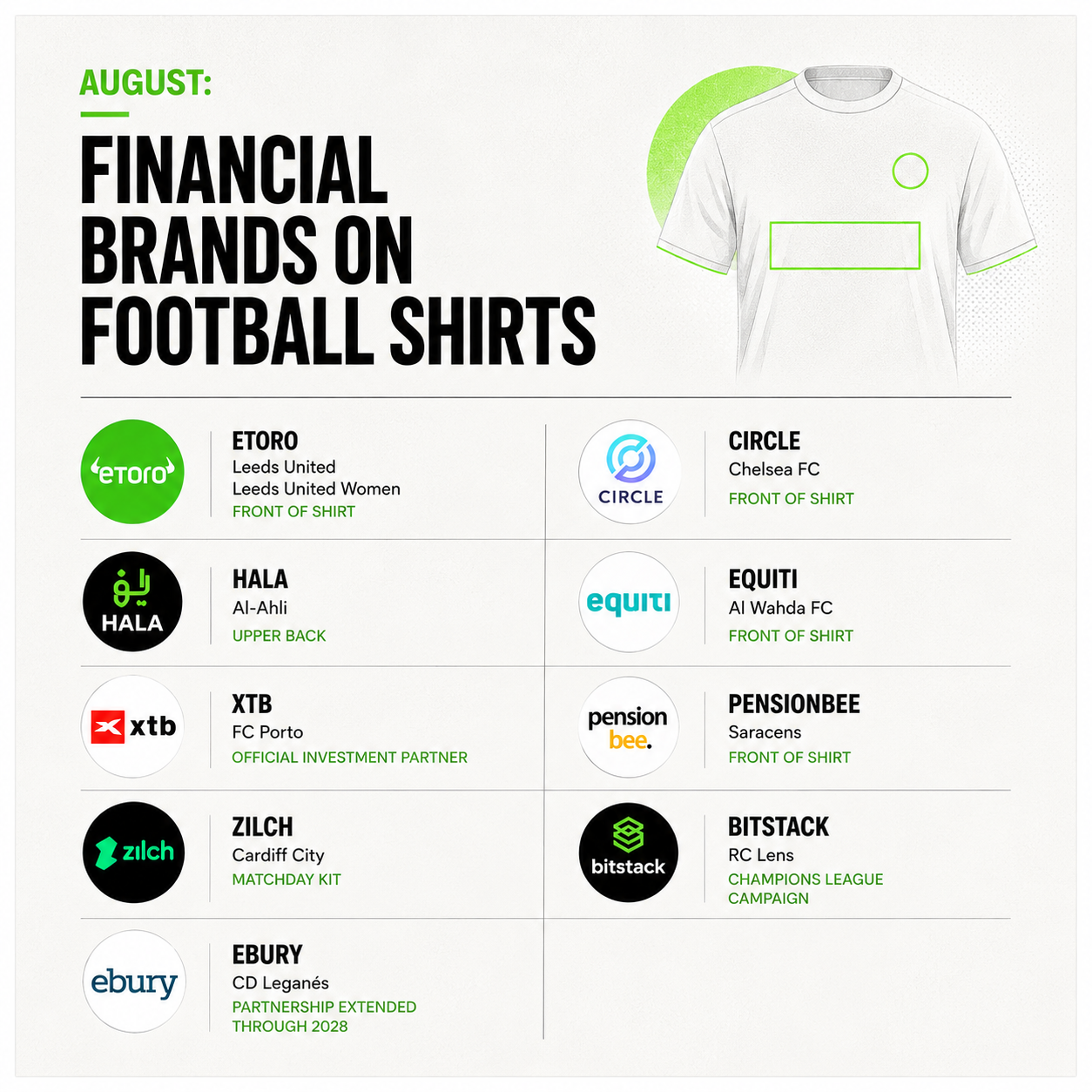
Then there was Ebury. Its Leganés partnership was extended through 2028, while its relationship with Fulham went much closer to the actual business of football, with Ebury supporting the club's €40m transfer move.
The FITA Angle
What struck me here is how quickly “fintech sponsorship” becomes too broad a description.
eToro is buying visibility and familiarity around investing. Circle is putting an actual financial product, USDC, in one of the most visible places in global football. Ebury is operating much closer to the financial machinery behind clubs and transfers.
Same sport, completely different commercial logic.
That's something I explored in more detail in The Fintech-ification of the Premier League.
 Marcel
💳 The financial product is becoming part of the sponsorship
What happened
American Express moved the NFL Extra Points Credit Card onto the American Express Network, with 18 NFL teams involved in the programme. Avant also launched a new NASCAR credit card, while American Express opened St Andrews Links access to card members.
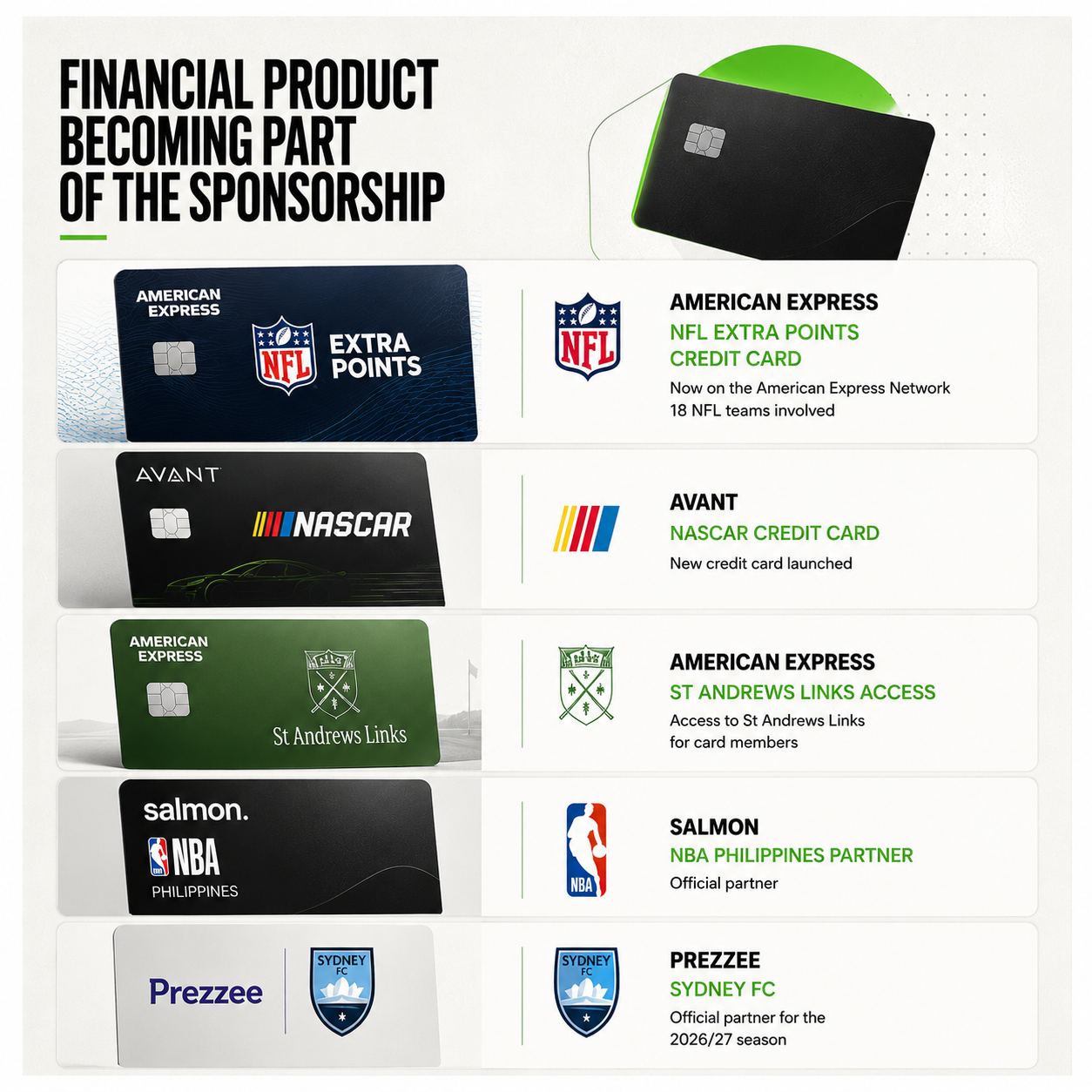
Salmon also became an NBA Philippines partner, and Prezzee joined Sydney FC for the 2026/27 season.
The FITA Angle
This is probably the area I find most interesting.
There's a big difference between putting a logo in front of someone and giving that person a reason to use your product.
A sports-branded card can earn rewards around the sport. A cardholder can get access to something they actually want. A partnership can move from awareness into usage, which is a much nicer place for a financial company to be.
American Express has been doing this particularly well. I spent a fair amount of time pulling apart how the pieces fit together — sponsorship, cards, ticketing, hospitality and access - in How American Express turned sports sponsorship into a payment engine.
 Marcel
🪙 Crypto is finding different ways into sport
What happened
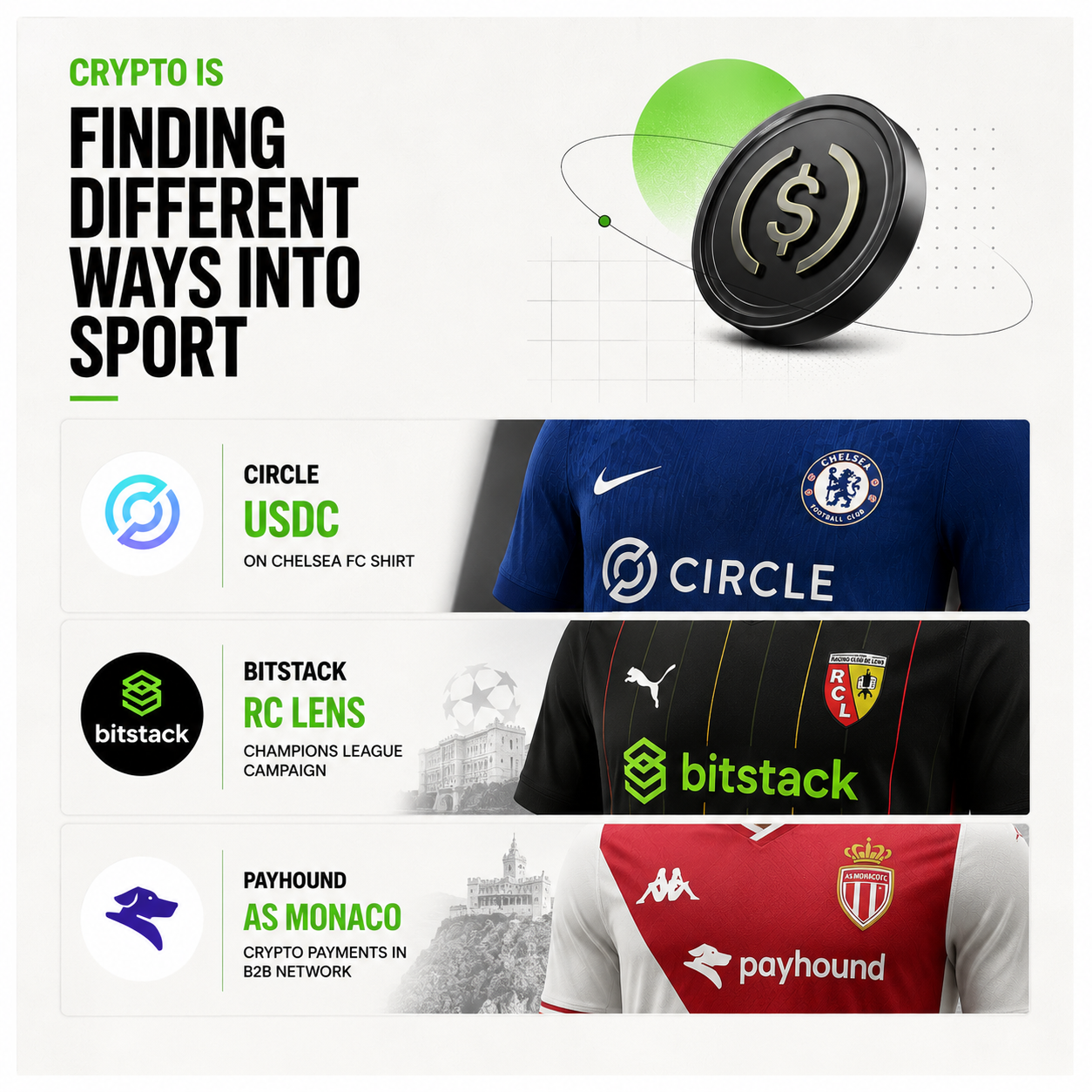
Circle's Chelsea partnership gave USDC one of the most prominent pieces of real estate in football. Bitstack joined RC Lens for its Champions League campaign, while Payhound brought crypto payments into AS Monaco's B2B network.
Three partnerships, three rather different approaches.
The FITA Angle
Circle is making crypto highly visible. Bitstack is using football alongside its investment and education proposition. Payhound is much closer to the transaction itself, using AS Monaco's business network as part of its B2B proposition.
I think that distinction matters.
Crypto has had plenty of sports sponsorships over the years. What I'm more interested in now is whether the partnership gives the underlying financial product somewhere to go.
A shirt gets seen. A payment gets used.
Payhound's Monaco deal is particularly interesting in that respect because the audience isn't simply fans. It's the businesses and partners around the club.
That feels like a useful direction for the category.
🏦 JPMorganChase keeps showing up. Everywhere.
What happened
JPMorganChase became the Miami HEAT's Official Financial Services Partner, adding another major sports property to a portfolio that already stretches across leagues, teams and venues.
And yes, I noticed.
At this point, whenever I see another Chase sports announcement, my reaction is increasingly: of course it is.
The FITA Angle
There is a reason the bank keeps doing it.
Sports gives a financial institution something difficult to buy through ordinary advertising: a reason to build relationships in person.
Clients can be entertained. Cardholders can get experiences. Prospects can be introduced to the brand. Local businesses can be brought into the room.
And Miami is particularly interesting because it sits at the meeting point of US finance, Latin American capital and a very strong sports culture.
I went properly down this rabbit hole in The Battle for Florida: Why banks and fintechs are betting big on sports.
 Marcel
I also started noticing just how often Chase appears across different sports properties, which led to JPMorgan Chase is everywhere in sports.
 Marcel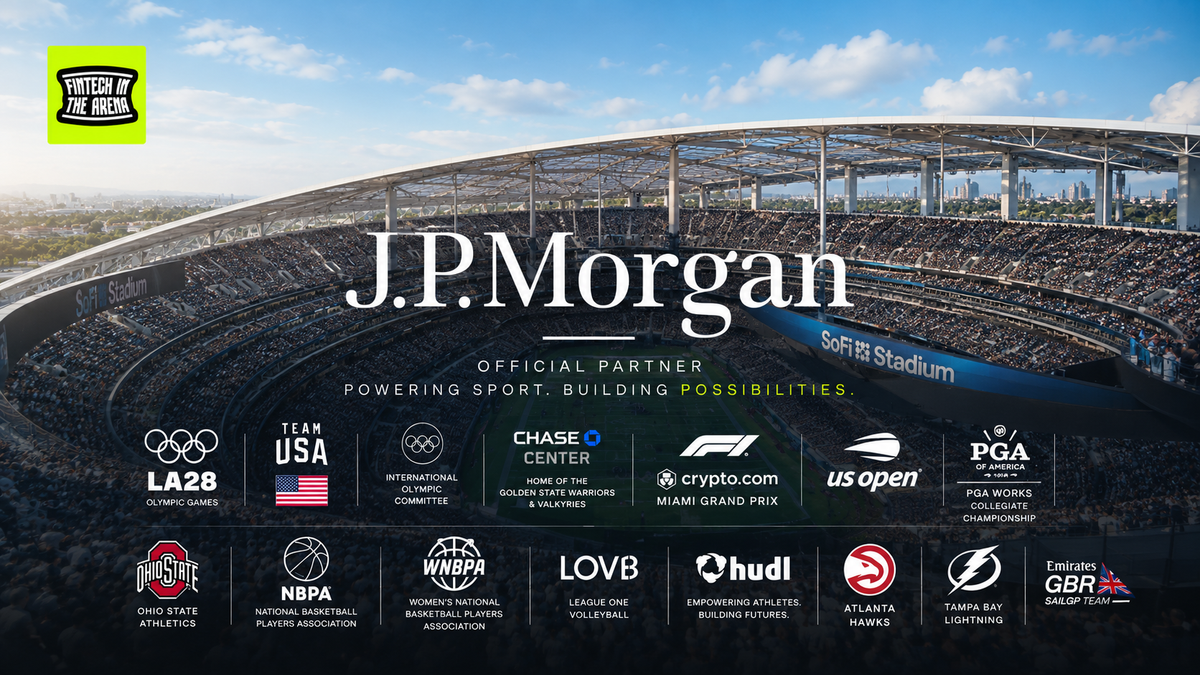
🏌️ B2B fintech is playing a different game
What happened
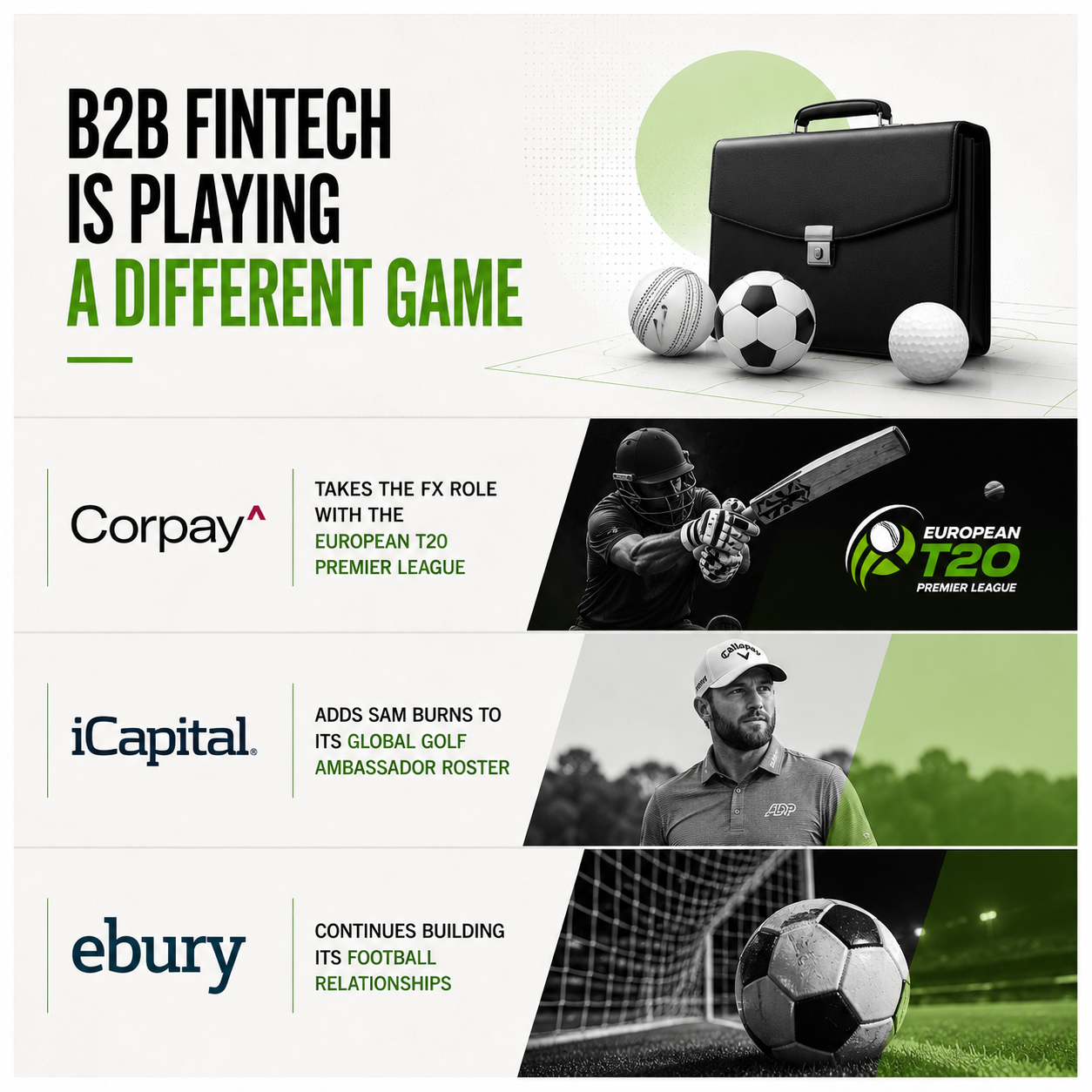
Corpay took the FX role with the European T20 Premier League, iCapital added Sam Burns to its global golf ambassador roster, and Ebury continued building its football relationships.
These deals don't necessarily need millions of fans to become customers.
They need the right people to notice.
The FITA Angle
This is one of the things I think gets lost when sports sponsorship is measured purely through reach.
If you're a consumer fintech, a huge audience is obviously useful. If you're selling FX, wealth management or B2B financial services, the person sitting in the hospitality box might be much more valuable than the person watching from home.
That makes sport a rather interesting business-development environment.
The branding is useful. The access is often the real asset.
🏁 Final Whistle
August left me with a fairly simple thought.
The sports sponsorship is becoming the starting point, rather than the whole story.
A fintech can use a club to acquire customers, a card to turn fans into users, a stadium to enter a market, a hospitality programme to reach businesses, or a payment partnership to get closer to the actual transaction.
And sometimes, of course, it just wants everyone to see its logo.
There's nothing wrong with that either.
I'll be watching what happens next.
See you in Edition 3.
Marcel
Following the money behind the game >>

Comments ()