The Fintech-ification of the Premier League
Fintechs have hijacked the Premier League. Global digital banks, FX rails, and wealth management platforms are capturing top-flight football’s prime real estate - repurposing 90 minutes of matchday attention into an aggressive engine for app installs, card acquisition, and enterprise payment volume.

Financial brands are taking over the Premier League sponsorship stack.
From banking and payments to trading, insurance and crypto, the biggest financial products are finding a place in football.
So what are they really buying?
Let’s decode →
The whistle has blown on a major commercial era, and the 2026/27 Premier League season marks an unprecedented shift in sports sponsorship. With top-flight English clubs phasing out front-of-shirt gambling brands, football's most valuable prime real estate was unlocked virtually overnight - creating a high-stakes £80m commercial opportunity for a new breed of sponsors.
Far from a quiet transition, this vacant inventory has catalyzed a high-octane takeover across the league. Nielsen and Reuters analysis confirms that digital banking platforms, multi-currency payment rails, and enterprise tech powerhouses have charged up the pitch to claim football's biggest stage.
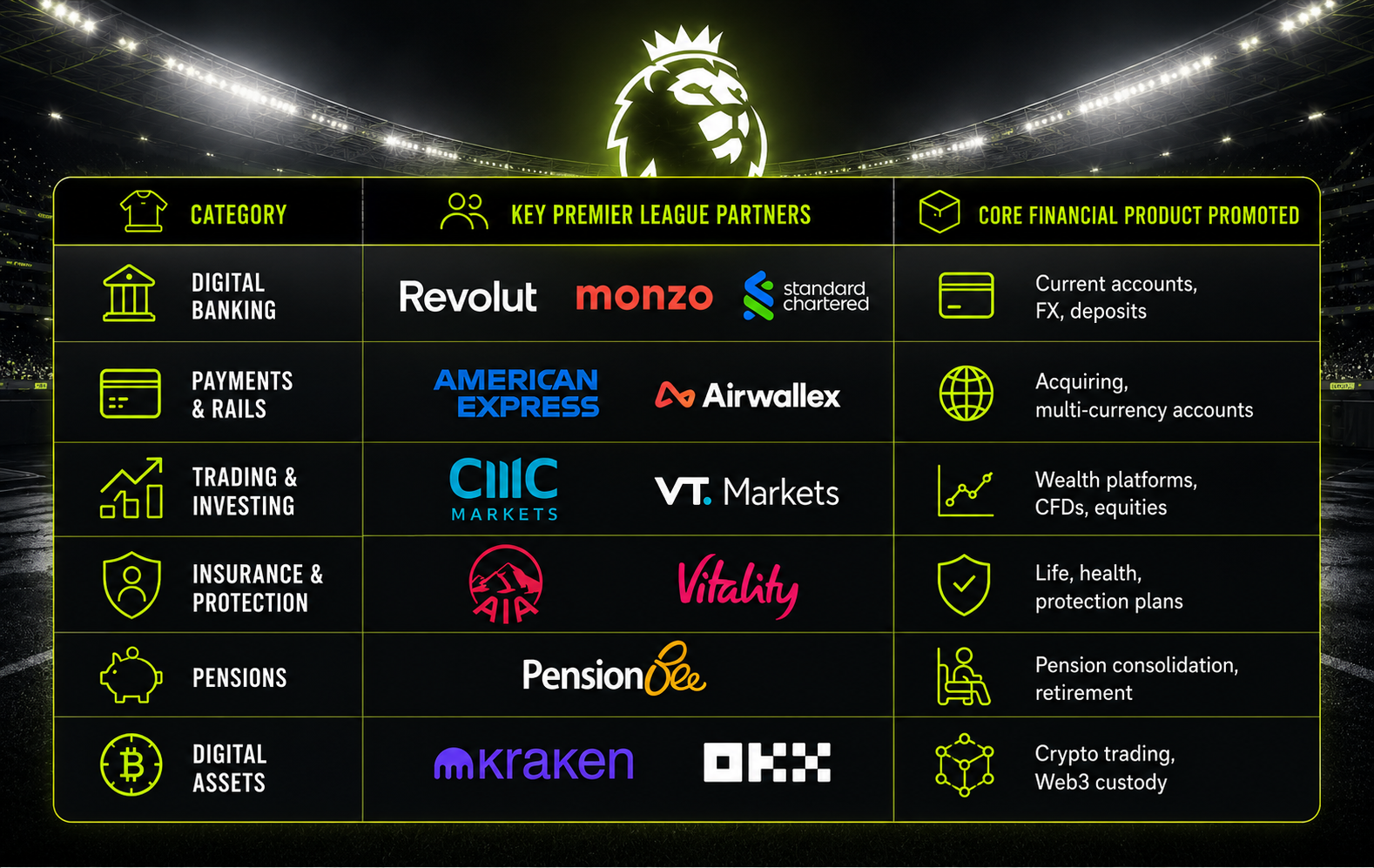
Football is being repurposed as a high-velocity channel for distribution, customer acquisition, and trust-building across the entire financial stack—from everyday retail current accounts and multi-currency business accounts to cross-border FX, wealth management platforms, and enterprise payment rails.
The Front of Shirt Has a New Financial Face
The most visible proof of this commercial realignment sits directly on the chest of 2026/27 Premier League kits. Rather than relying on speculative offshore sportsbooks, top-flight clubs are executing multi-layered commercial agreements with institutions whose core products sit at the center of daily financial behavior.
- Coventry City × Monzo: Monzo extended its principal partnership with Coventry City into a third consecutive season, scaling its front-of-shirt deal into top-flight football following the club’s return to the Premier League. Monzo uses primary kit real estate - and targeted activations like hot-coral away kits and 1p account-opening promotions - to drive retail app downloads, current account acquisition, and card spending among everyday football fans.
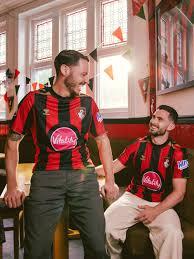
- AFC Bournemouth × Vitality: Vitality expanded its multi-year commercial agreement with Bournemouth for the 2026/27 season, stepping up as primary front-of-shirt sponsor to replace gambling brand BJ88. Crucially, this expands on a deal that already includes long-standing venue naming rights at the Vitality Stadium, using both stadium real estate and primary kit inventory to promote private health insurance, life insurance, and gamified wellness ecosystems tied to consumer protection.
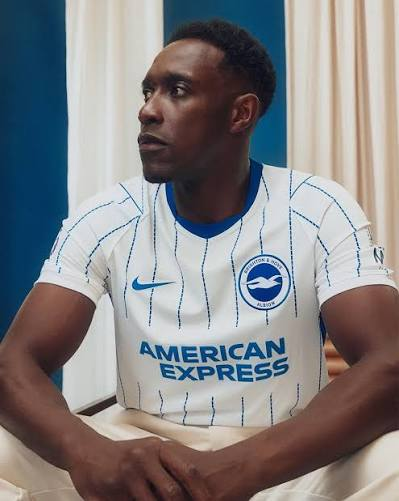
- Brighton & Hove Albion × American Express: Amex maintains an all-encompassing, dual-asset deal with Brighton, combining main shirt sponsorship with full venue naming rights for the American Express Stadium. This integrated deal allows Amex to promote high-margin credit cards, drive transaction volume across its card network, and incentivize fan engagement through Membership Rewards and exclusive matchday ticketing perks.
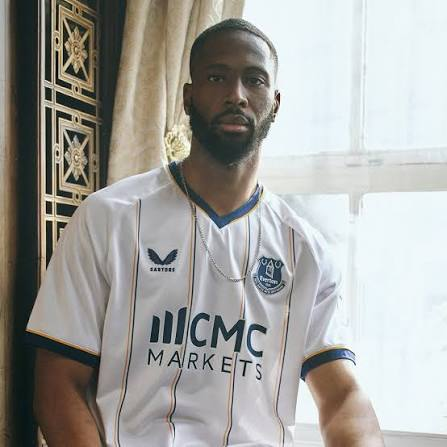
- Everton × CMC Markets: CMC Markets secured a multi-year main club partnership with Everton, marking a major front-of-shirt agreement designed to transition the company’s public profile from traditional online trading to a comprehensive investing, wealth management, and institutional platform.
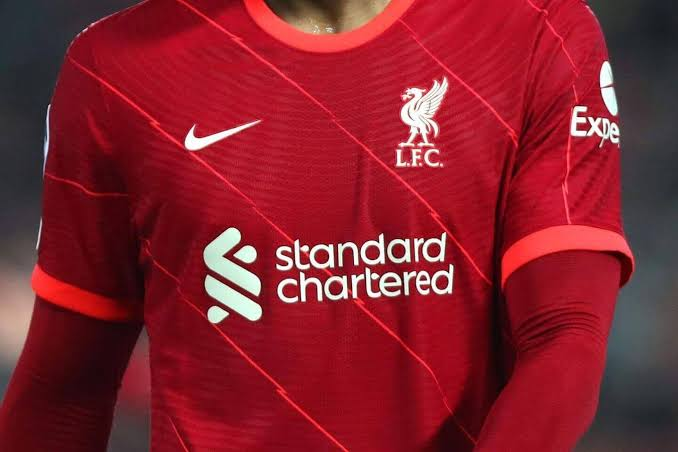
- Liverpool × Standard Chartered: Liverpool’s long-standing, multi-million-pound main shirt partnership with Standard Chartered anchors the bank’s global commercial presence, using elite European football inventory to market retail banking services, corporate loans, and international cross-border liquidity across high-growth Asian and Middle Eastern markets.
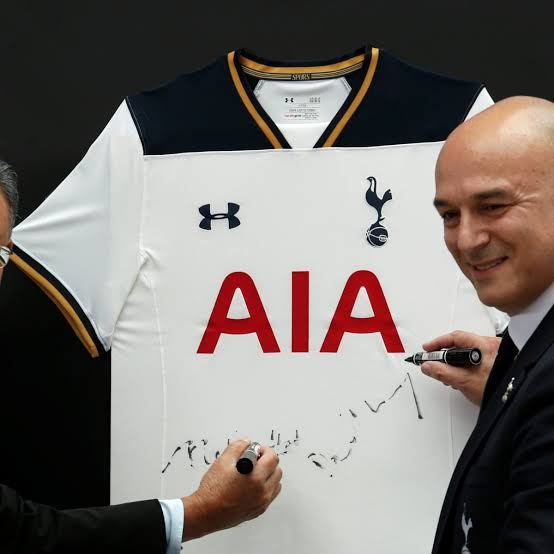
- Tottenham Hotspur × AIA: Spurs’ landmark front-of-shirt sponsorship deal with AIA serves as a primary distribution engine for the pan-Asian insurance giant, using global Premier League viewership to acquire customers for its life insurance, health protection, and wealth plans.
The overarching pattern across these 2026/27 deals is clear: commercial inventory once dominated by high-friction gambling operators has been captured by platforms designed to process payments, manage risk, hold deposits, and route capital.
From Logo Placement to Product Distribution
To understand why consumer fintechs are investing tens of millions into Premier League inventory, one must look past brand awareness. Modern digital banks operate as super-apps, meaning a matchday shirt placement is merely the top of a deeply integrated conversion funnel.
When Revolut partnered with Manchester City, it secured back-of-shirt branding across the Men's and Women's first teams. But the underlying mechanics are purely transactional. Revolut uses the partnership to drive adoption of its multi-currency accounts, roll out co-branded virtual card designs within its app, gamify matchday retail via RevPoints loyalty integrations, and deploy Revolut Pay at club checkout touchpoints. Football converts passive fans into daily active banking users.
READ NEXT
 Marcel
The Infrastructure Behind the Game
While digital challenger banks target the retail fan, B2B financial infrastructure platforms are deploying a completely different playbook: using elite clubs as live operational proofs of concept.
When Airwallex expanded its global partnership with Arsenal, it wasn't bidding for retail mindshare. Premier League clubs operate as complex, multi-currency multinational enterprises managing cross-border player transfers, overseas tours, international supplier payouts, and multi-currency merchandise distribution.
By embedding its financial infrastructure into Arsenal's hospitality payment systems, Airwallex turns the stadium concourse into a working demo of its foreign exchange, multi-currency corporate accounts, and global payment acceptance suite. Demonstrating that a platform can power a Premier League giant's international treasury builds instant enterprise credibility for middle-market corporate clients globally.
Turning Fans Into Financial Customers
The ultimate evolution of sports fintech occurs when a payment provider connects its network directly to matchday commerce, transforming a sponsorship line-item into a net-positive transaction engine.
American Express pioneered this model at Brighton & Hove Albion. By combining stadium naming rights with merchant acquiring, Amex ensures every matchday purchase—from digital ticketing to venue concessions—routes across its closed-loop payment rails. Cardholders receive statement credits, fast-track stadium entry, and presale access, while Amex captures top-of-wallet preference and merchant acquiring margins.
READ NEXT
 Marcel
Finance Across Every Layer of the Sponsorship Stack
The commercial expansion of financial institutions across English football extends far beyond main front-of-shirt agreements. As primary shirt inventory grows increasingly competitive, financial services, digital asset platforms, and wealth managers are acquiring specialized real estate across training wear, sleeve patches, stadium concourses, and digital fan experiences:
- Crypto & Web3 Training Wear (OKX × Manchester City): OKX initially entered English football as Manchester City's official cryptocurrency partner before expanding into a landmark training kit deal. By placing its brand exclusively on the men’s and women’s first-team training apparel, OKX parallels the daily practice and discipline of elite athletes with the preparation required for crypto trading—using behind-the-scenes content, squad training footage, and matchday preparation to engage retail crypto investors.
- First-Ever Official Sleeve & Web3 Partner (Kraken × Tottenham Hotspur): Kraken secured a multi-year global partnership as Spurs’ first-ever official crypto and Web3 partner, alongside physical sleeve branding on both the men's and women's matchday kits. Kraken utilizes this high-visibility sleeve inventory, digital fan pop-ups, and stadium integrations—including powering Web3 activations at the F1 Drive experience beneath Tottenham Hotspur Stadium—to drive user acquisition for its mobile and pro trading platforms.
- Targeted Women's & Academy Sleeve Inventory (PensionBee × Brentford): Demonstrating how financial brands tailor sponsorship layers to specific demographics, PensionBee extended its multi-year partnership with Brentford by securing official sleeve sponsorship rights across the club’s women’s and academy matchday kits. Combined with Gtech Community Stadium activations and digital content creation, PensionBee uses this targeted inventory to promote pension consolidation, retirement savings, and long-term financial planning.

- Global Official CFD & FX Platform (VT Markets × Newcastle United): Multi-asset broker VT Markets entered a global partnership with Newcastle United, using stadium LED board rotation, international broadcast inventory, and club branding to market its multi-currency CFDs, forex, and equities trading platform directly to global sports audiences.
However, this rapid influx of retail trading and Web3 brands across secondary kit inventory has drawn sharp regulatory headwinds. The Financial Conduct Authority (FCA) issued explicit warnings regarding Premier League crypto partnerships, cracking down on unauthorized financial promotions and high-risk speculative asset marketing. The scrutiny underscores a growing divide in football finance: while tier-one banks and enterprise payment rails build operational trust, speculative trading platforms face mounting pressure to prove consumer protection compliance.
The New Financial Sponsorship Stack
The 2026/27 kickoff confirms that English football’s commercial ecosystem has undergone a permanent structural re-engineering.
The gambling ban may have opened the space on the pitch, but strategic alignment is what’s keeping financial giants on the team sheet. Premier League clubs offer an unrivaled global arena and broadcast footprint, while modern fintechs and financial institutions bring the digital infrastructure needed to turn fan attention into active economic volume.
In this new era of sports sponsorship, simple brand exposure is no longer the final objective. The logo on the chest commands the audience—the financial products embedded beneath are where the long-term value is won.
Comments ()