
The Battle for Florida: Why Banks and FinTechs Are Betting Big on Sports
Financial brands are taking over Florida sports. From Nubank and Banco Inter buying MLS stadium rights to JPMorgan Chase and Itaú targeting NBA arenas, banks are using sports for market entry, acquisition, and wealth defense. See how finance is carving up Sunshine State sports!
Florida operates as the dual capital of Latin American wealth and North American fintech expansion.
Hundreds of thousands of affluent families, tech founders, and capital managers migrated to the Miami-Orlando corridor alongside an influx of Latin American private wealth seeking dollar stability. Financial institutions faced a immediate operational challenge: capturing a mobile, cross-border, high-net-worth audience through non-traditional channels.
Direct mail and TV spots yield minimal results for this demographic. Sports assets fill the gap.
Financial institutions and challenger neobanks commit massive capital across South Florida and Central Florida venues. These deals convert stadium naming rights, ticket checkout integrations, and VIP access into customer acquisition engines.
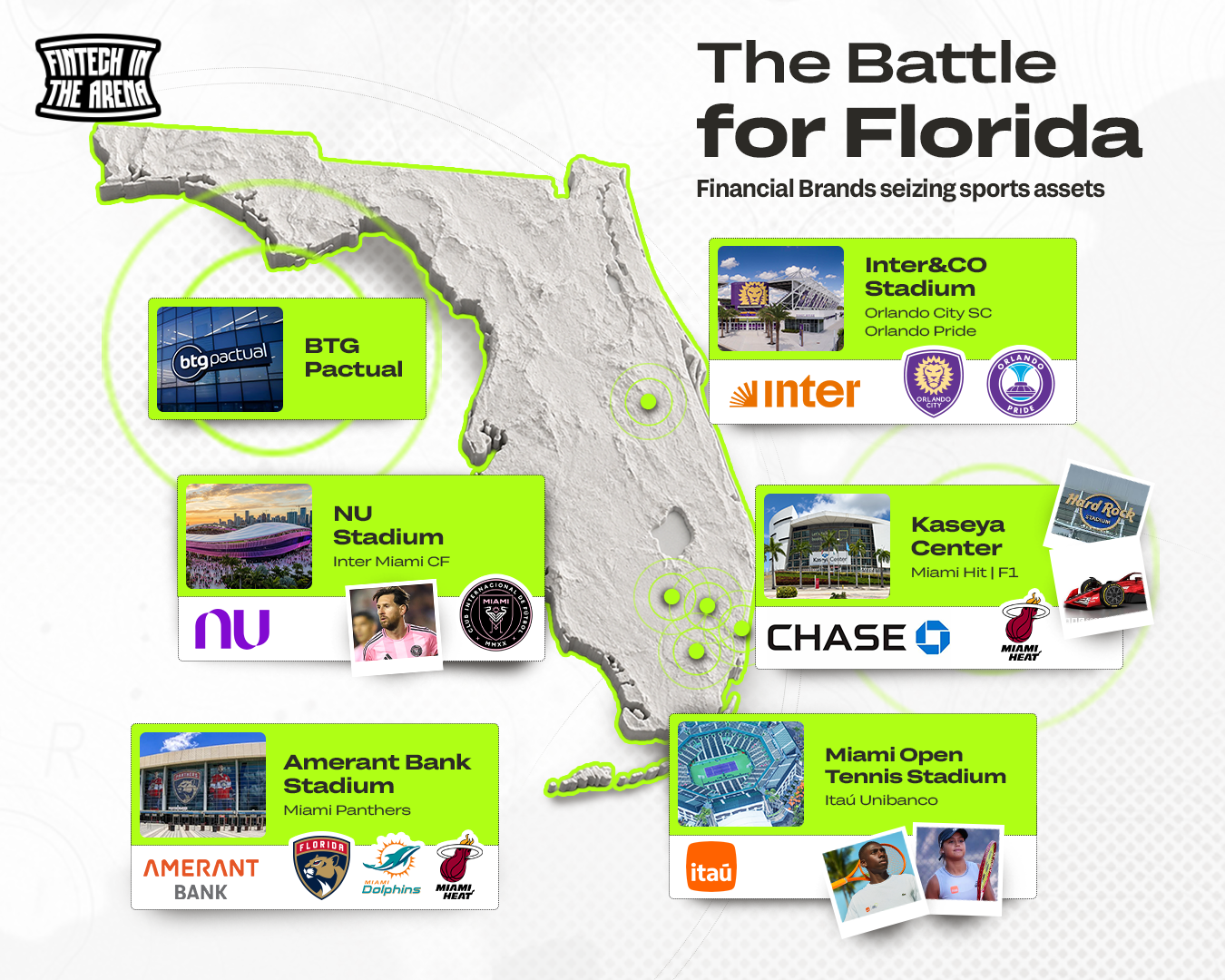
Here is how the battle lines run across the region >>
1) The Challenger Neobank Assault: Nubank & Inter&Co
Latin American neobanks establishing a U.S. presence bypass traditional branch construction in Brickell. They purchase primary branding rights at major football venues instead.
Nubank secured the naming rights deal for Inter Miami CF’s home stadium, establishing Nu Stadium. The arrival of Lionel Messi expanded Inter Miami’s global audience, providing Nubank immediate brand authority on U.S. soil while serving as an acquisition funnel for cross-border capital moving into Florida.

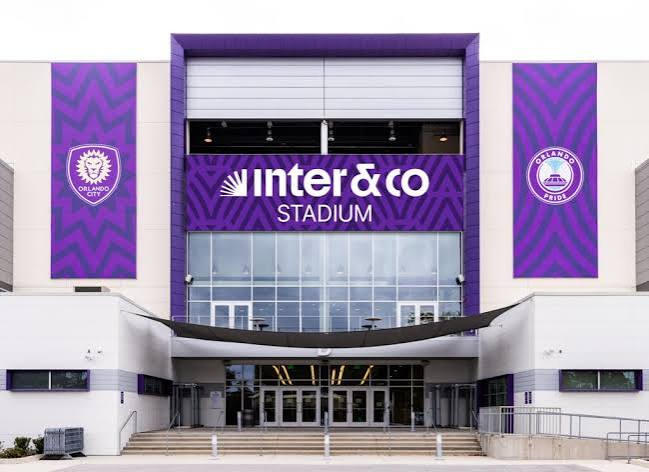
In Central Florida, Banco Inter executed a parallel playbook by signing a multi-year deal for Inter&Co Stadium, home of Orlando City SC and the Orlando Pride. Orlando serves as a primary hub for Brazilian tourism and real estate investment, making the venue an onboarding engine for Inter’s multi-currency account products.
The Neobank Execution:
- Instant Trust Acceleration: Challenger brands build U.S. consumer confidence through high-visibility physical venue partnerships.
- Dual-Currency Customer Funnels: Capturing Latin American expats and tourists upon arrival in Florida to drive dollar-denominated account creation.
- Global Broadcast Reach: Inter Miami matches broadcast internationally, giving Nubank global television reach alongside its local footprint.
2) The LatAm Private Banking Defense: Itaú Unibanco
While challenger neobanks pursue mass-market retail accounts via MLS venues, traditional Latin American banking institutions execute high-net-worth retention strategies.
Itaú Unibanco extended its presenting sponsorship of the Miami Open through 2028, maintaining over a decade at the center of South Florida's premier tennis tournament. Tennis draws a distinct demographic: high-income, international, and densely populated by corporate executives.
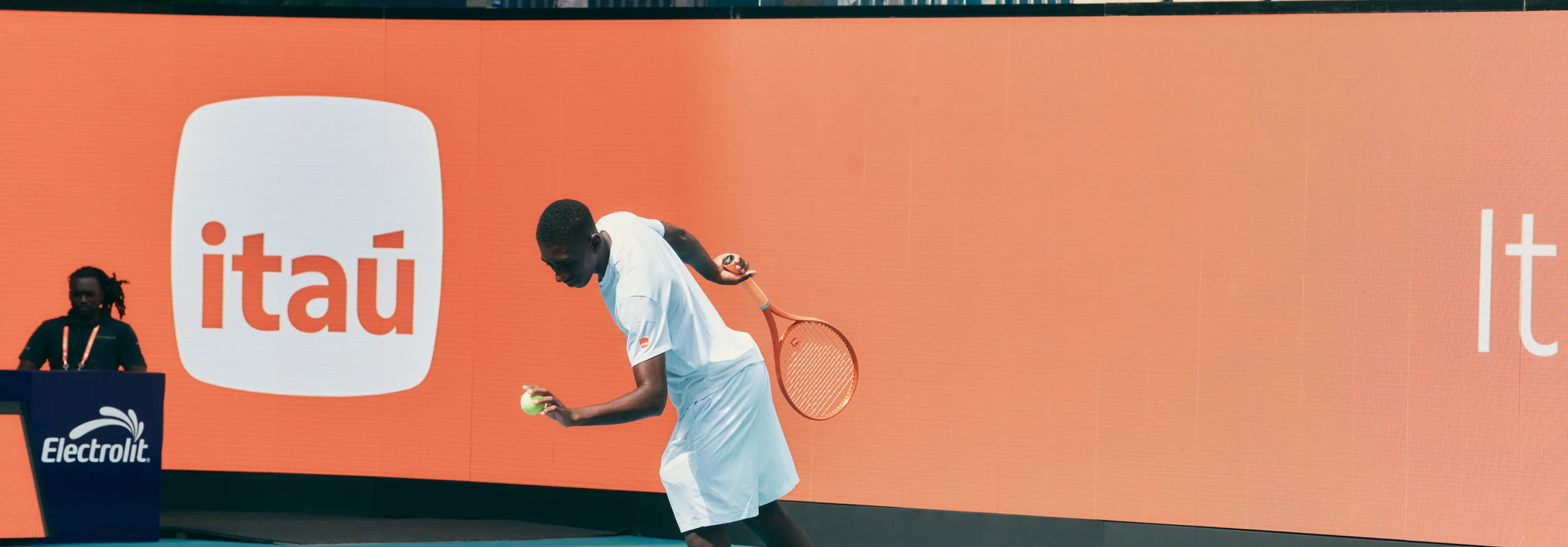
Itaú utilizes its Itaú Personnalité brand to host private hospitality suites and courtside lounges. The tournament functions as a dedicated client-servicing platform where private bankers manage relationships with wealthy Latin American families relocating assets offshore.
The Wealth Execution:
- Demographic Precision: Reaching ultra-high-net-worth families within luxury lifestyle environments.
- Offshore Asset Retention: Keeping private banking clients inside the Itaú network during capital transitions into South Florida.
- Relationship Courtship: Using tournament access to hold extended wealth management discussions outside standard office settings.
3) The Regional Fortress: Amerant Bank’s Tri-County Strategy
As international institutions seek local market share, regional incumbents construct defensive positioning around the local economy.
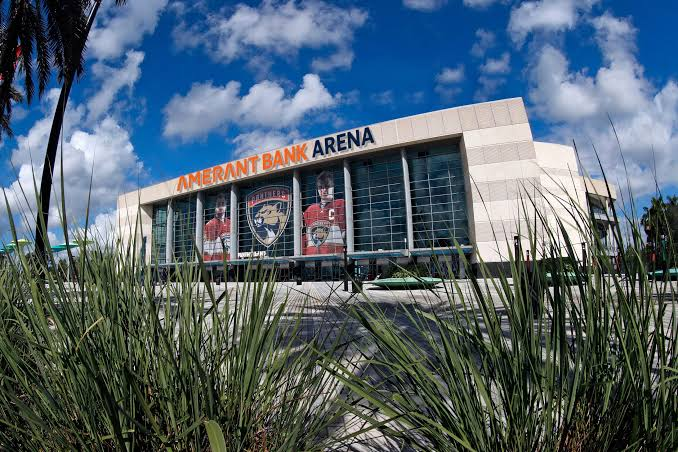
Coral Gables-headquartered Amerant Bank secured the naming rights to the Florida Panthers’ home venue, Amerant Bank Arena. Amerant expanded this footprint across multiple leagues simultaneously.
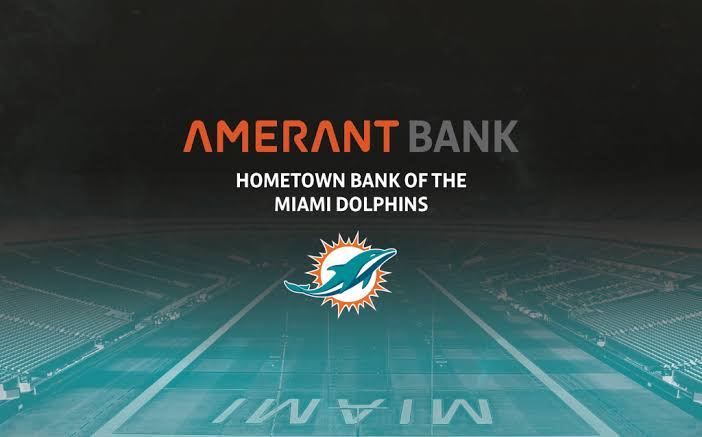
The bank maintains official banking partner status with the Miami Heat (NBA) and the Miami Dolphins (NFL), securing exclusive VIP hospitality rights to "The NINE" suite at Hard Rock Stadium.
The Regional Execution:
- Local Market Defense: Blocking national competitors from exclusive banking category rights across South Florida venues.
- Tri-County Ubiquity: Establishing consistent touchpoints across Broward, Miami-Dade, and adjacent stadium networks.
- Commercial Lead Generation: Utilizing executive suite hospitality to source South Florida commercial real estate and business banking relationships.
4) Money-Center Dominance: JPMorgan Chase × Miami Heat & F1
Wall Street money-center institutions use marquee South Florida franchises and international events to integrate high-margin consumer products directly into arena infrastructure.
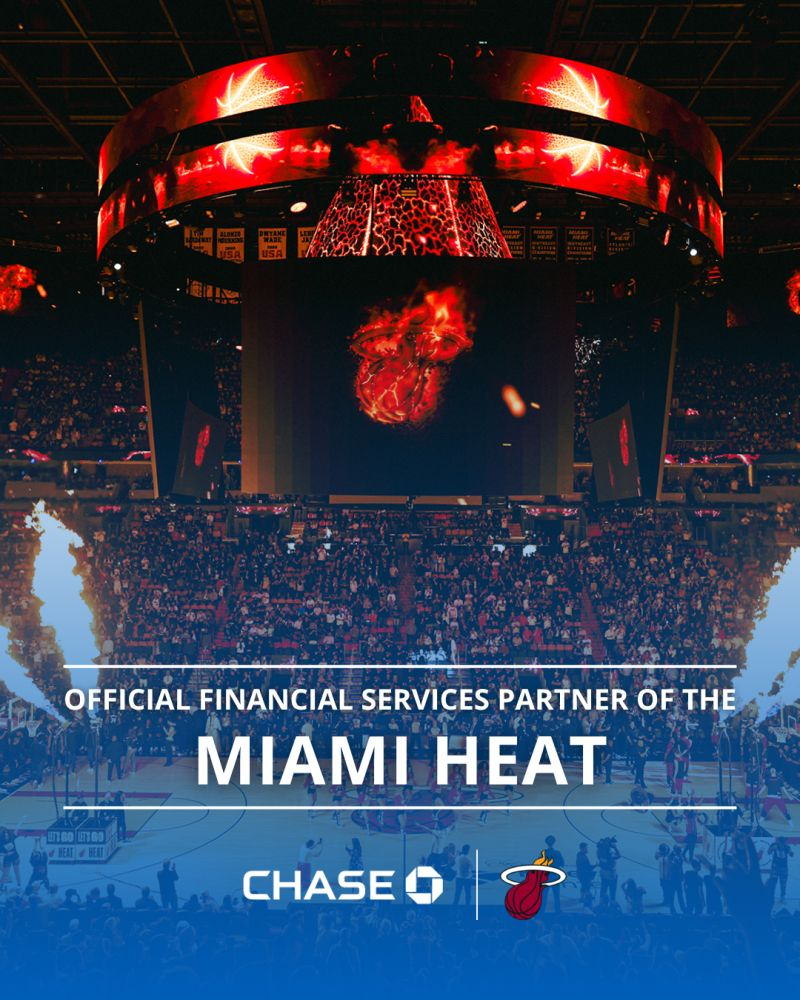
JPMorgan Chase operates as the Official Financial Services Partner of the Miami Heat and Kaseya Center. Rather than stopping at traditional court-side signage, Chase embeds cardholder incentives directly into the game-day footprint: dedicated fast-track arena entrances for cardholders, concession and retail checkout discounts across Kaseya Center, and priority access to high-demand event ticketing. The partnership converts local fan enthusiasm into immediate retail banking engagement for Chase’s regional footprint.
Simultaneously, during the Formula 1 Crypto.com Miami Grand Prix at Hard Rock Stadium, J.P. Morgan Payments deploys its merchant infrastructure across the circuit. The bank uses the 200,000+ race crowd to stress-test biometric checkouts, tap-to-phone terminals, and point-of-sale systems under peak load, while Chase Sapphire manages trackside VIP lounges to drive high-tier card activations among visiting international capital.

The Money-Center Execution:
- Arena Customer Locking: Integrating cardholder perks, dedicated entrance lanes, and automated discounts directly into the Kaseya Center point-of-sale environment.
- High-Volume Load Testing: Running halftime and post-race transaction spikes through J.P. Morgan Payments hardware under extreme real-world conditions.
- Dual-Tier Segmentation: Capturing mass consumer card volume via NBA arena partnerships while targeting ultra-high-net-worth attendees through trackside F1 hospitality.
5) The Private Credit & Investment Capital Playbook: BTG Pactual & Institutional Capital
The financial battle in Florida extends into middle-market debt and private equity channels targeting venue real estate directly.
Latin American investment banking titan BTG Pactual—which operates a growing US presence to serve Latin American capital—uses specialized private credit structures to fund sports infrastructure, venue real estate, and tech-enabled fan platforms. Rather than buying stadium logos, institutional private credit providers target the balance sheets behind Florida's sports properties.
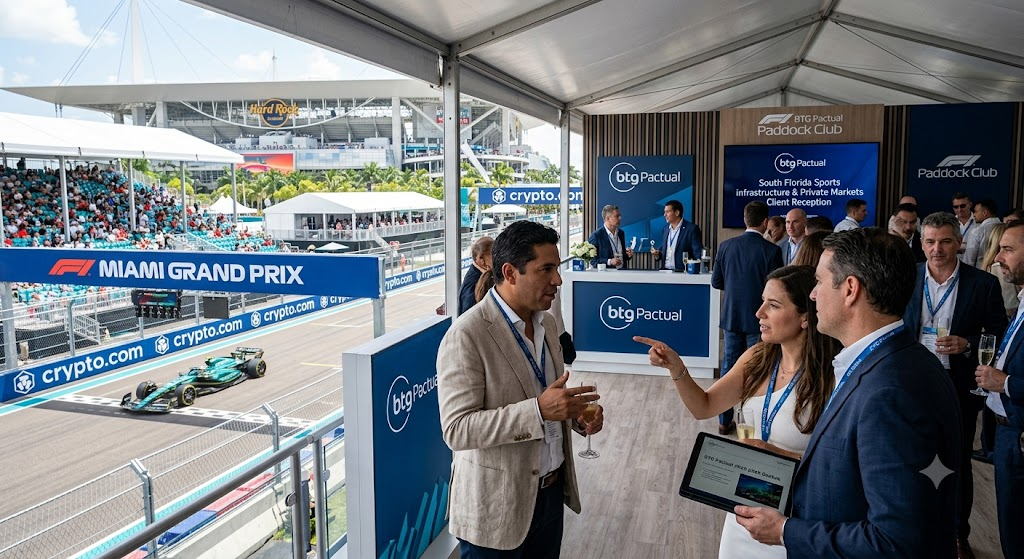
Firms deploy capital into stadium technology refinancings, high-end VIP hospitality developments around venues, and sports management ventures. By funding the core infrastructure behind South Florida's sports boom, investment institutions secure direct exposure to regional real estate debt, commercial syndicates, and corporate advisory retainers connecting Florida to capital across North and South America.
The Private Capital Execution:
- Infrastructure Financing: Providing debt and private credit solutions for stadium upgrades and commercial sports real estate.
- Dealflow Generation: Using sports business advisory to connect Latin American institutional investors with U.S. middle-market opportunities.
- B2B Executive Access: Structuring high-value private client networking around niche sports events like polo, golf, and motorsport syndicates.
The battle for Florida shows how sports venues have shifted from simple marketing backdrops into critical infrastructure for global finance. Cross-border challenger banks use high-capacity MLS stadiums to establish immediate legitimacy and acquire mass-market consumer volume, while legacy wealth institutions deploy private suites at tennis and motorsport events to protect elite offshore capital portfolios.
Meanwhile, regional banks defend local market share through exclusive multi-franchise partnerships, and global financial giants treat high-density events as real-world testing grounds for enterprise payment tech.
Ultimately, every level of the financial services stack now relies on Florida's sports ecosystem to secure physical access to mobile, high-value capital.



Comments ()