Visa vs. Mastercard and the High-Stakes Battle for Global Sports
In this deep dive, we break down how Visa and Mastercard monetize sports fandom, the exact unit economics powering their sponsorship engines, and how both giants capture market share across global sport.
Behind the multi-hundred-million-dollar sports deals lies a fierce strategic divide. Here is how two legacy networks turn stadiums, tracks, and tournaments into transactional powerhouses and high-LTV customer engines >>
For global payment networks, sports sponsorships are far more than high-visibility logo placements; they are massive distribution channels, volume aggregators, and transaction acceleration engines.
Both giants pour astronomical sums into global sports properties, yet their playbooks reflect fundamentally opposing views on how to capture market share, convert consumers, and lock in transaction volume.
As we explored in our deep dive on How FinTech is Powering Formula 1's New Commercial Era, financial networks are increasingly relying on sports ecosystems to power their core commercial engines.
 Marcel
Visa: The Mega-Event Utility & Venue Monopoly
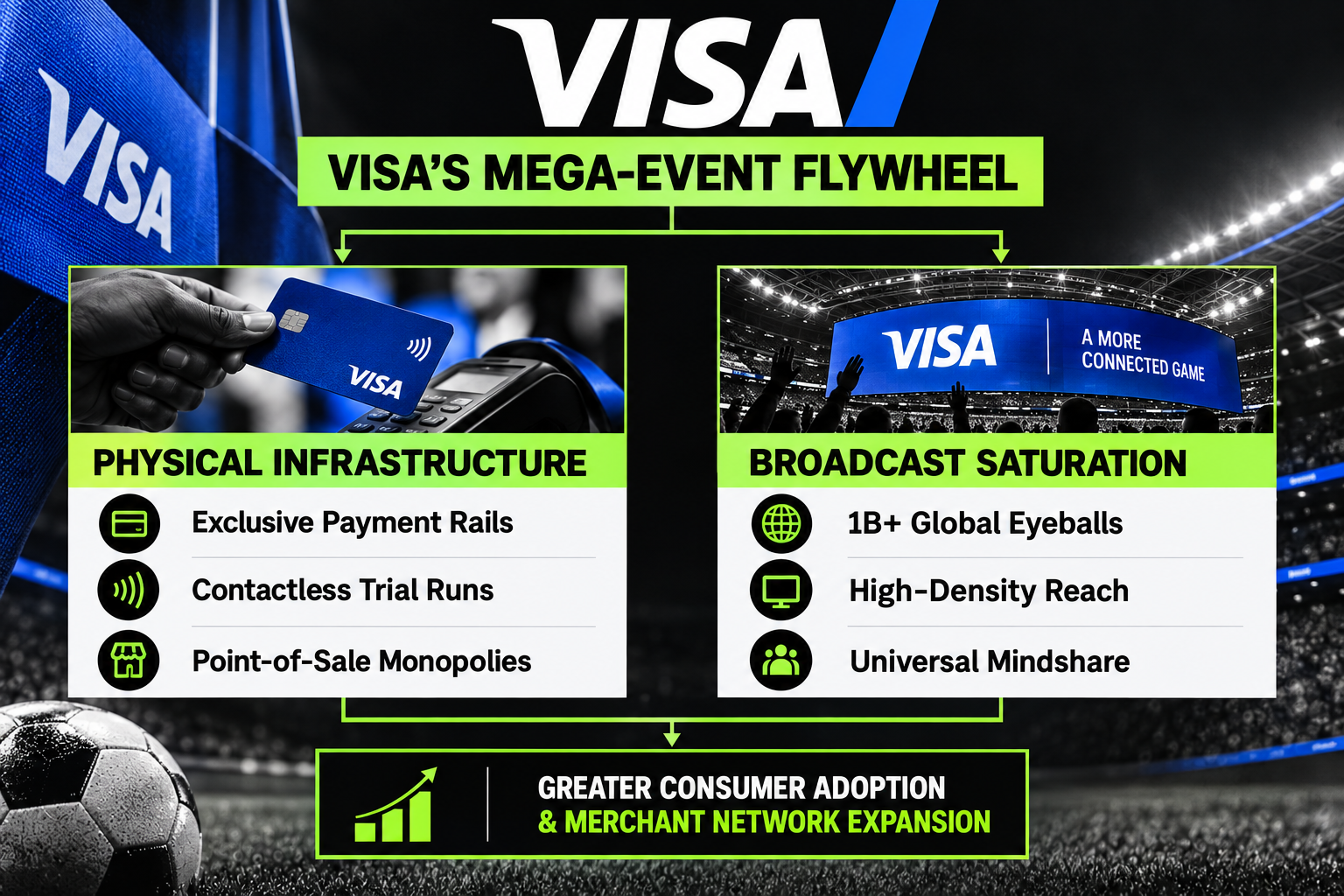
Visa’s sports playbook rests on a single core thesis: total infrastructure dominance paired with captive, high-density transaction environments.
Rather than fragmenting its marketing spend across hundreds of regional club teams or domestic leagues, Visa concentrates its capital into quadrennial mega-events that command global broadcast monopolies and complete physical point-of-sale control.
The Global Portfolio Anchors
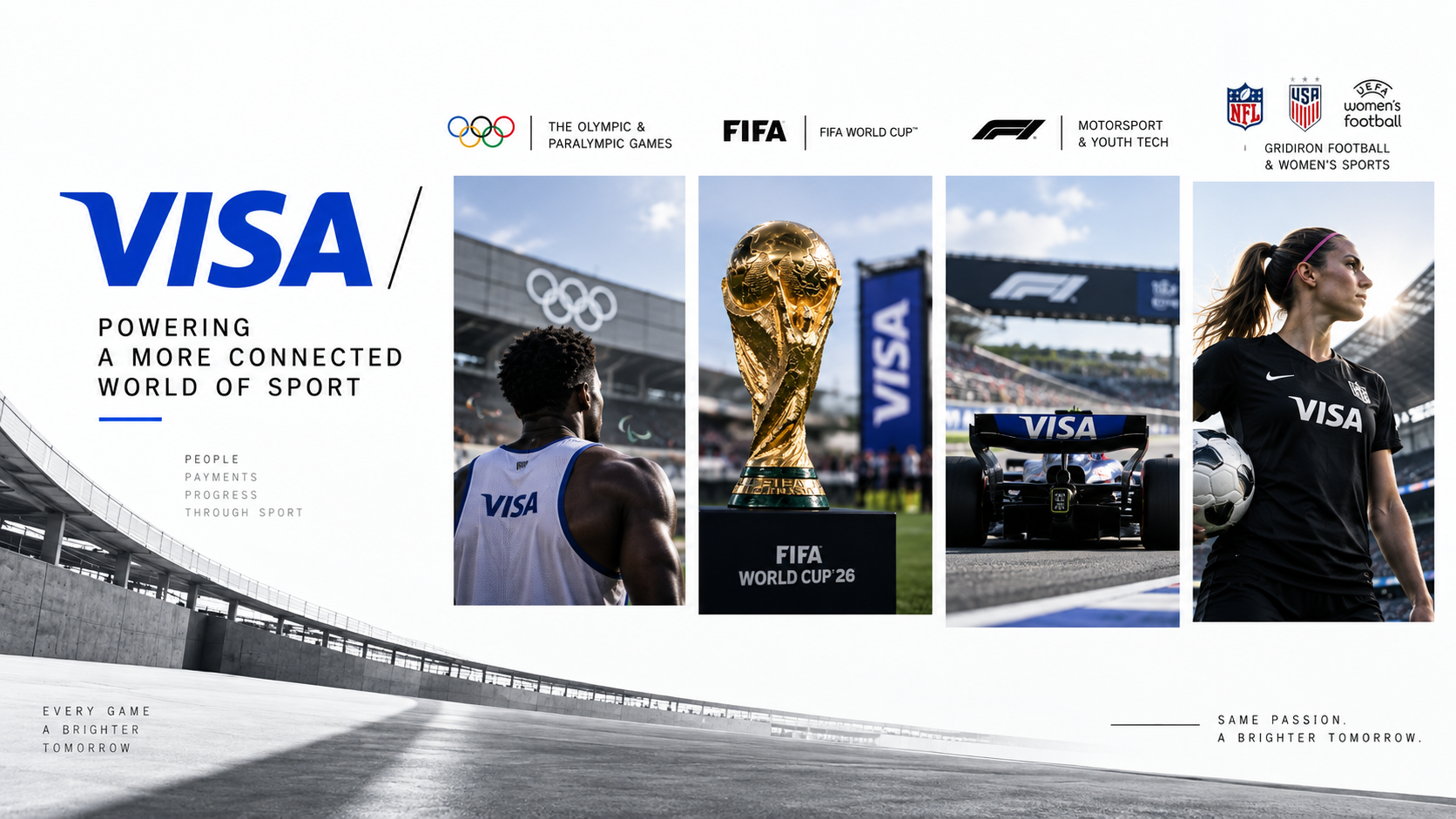
- The Olympic & Paralympic Games: Worldwide Olympic Partner continuously since 1986, with an extended mandate through 2032 (IOC Official Announcement).
- FIFA World Cup: Exclusive Payment Technology Partner covering global flagship events, including the FIFA World Cup 2026 across North America (FIFA Official Press Release).
- Motorsport & Youth Tech: Title partner of Visa Cash App RB F1 Team, paired with partner status across Oracle Red Bull Racing and F1 Academy (Visa Newsroom Announcement).
- Gridiron Football & Women's Sports: Official Payment Services Sponsor of the NFL, complimented by standalone bets on US Soccer and UEFA Women’s Football (Visa Sports Partnerships).
Strategic ROI: How These Deals Pay Off for Visa
Visa doesn't buy sports rights merely to display a logo on a television screen. They treat major sports venues as live testing grounds and high-friction transaction hubs that directly boost bottom-line metrics:
- Instant Card Issuance & Forced POS Adoption: By locking in venue-wide payment exclusivity at the Olympics and World Cup, Visa creates cash-free, Visa-only ecosystems. Fans purchasing food, drinks, or merchandise on-site are forced to use a Visa card or instantly download a co-branded digital prepaid card, generating massive short-term wallet creation.
- Rapid Normalization of New Payment Tech: Visa uses high-stress stadium environments as live pilots to accelerate consumer adoption of new rails—ranging from early contactless NFC tapping and tap-to-phone POS tech to wearable payment rings and biometric checkout lines.
- B2B Merchant Network Expansion: Securing exclusive payment rights at global venues gives Visa immense leverage when negotiating acquiring contracts with host-city merchants, stadium vendors, and local transport networks, expanding its overall merchant acceptance footprint globally.
- Mass-Market Brand Trust: Controlling the single most-watched sporting events on Earth secures top-of-mind brand equity across every consumer bracket, reinforcing its status as the default global payment utility.
Much like How American Express Turned Sports Sponsorship into a Payment Engine, this level of venue-wide operational leverage allows card schemes to turn fan transactions into a closed-loop merchant acquisition tool.
 Marcel
Mastercard: High-Affinity Ecosystems & "Priceless" Passions
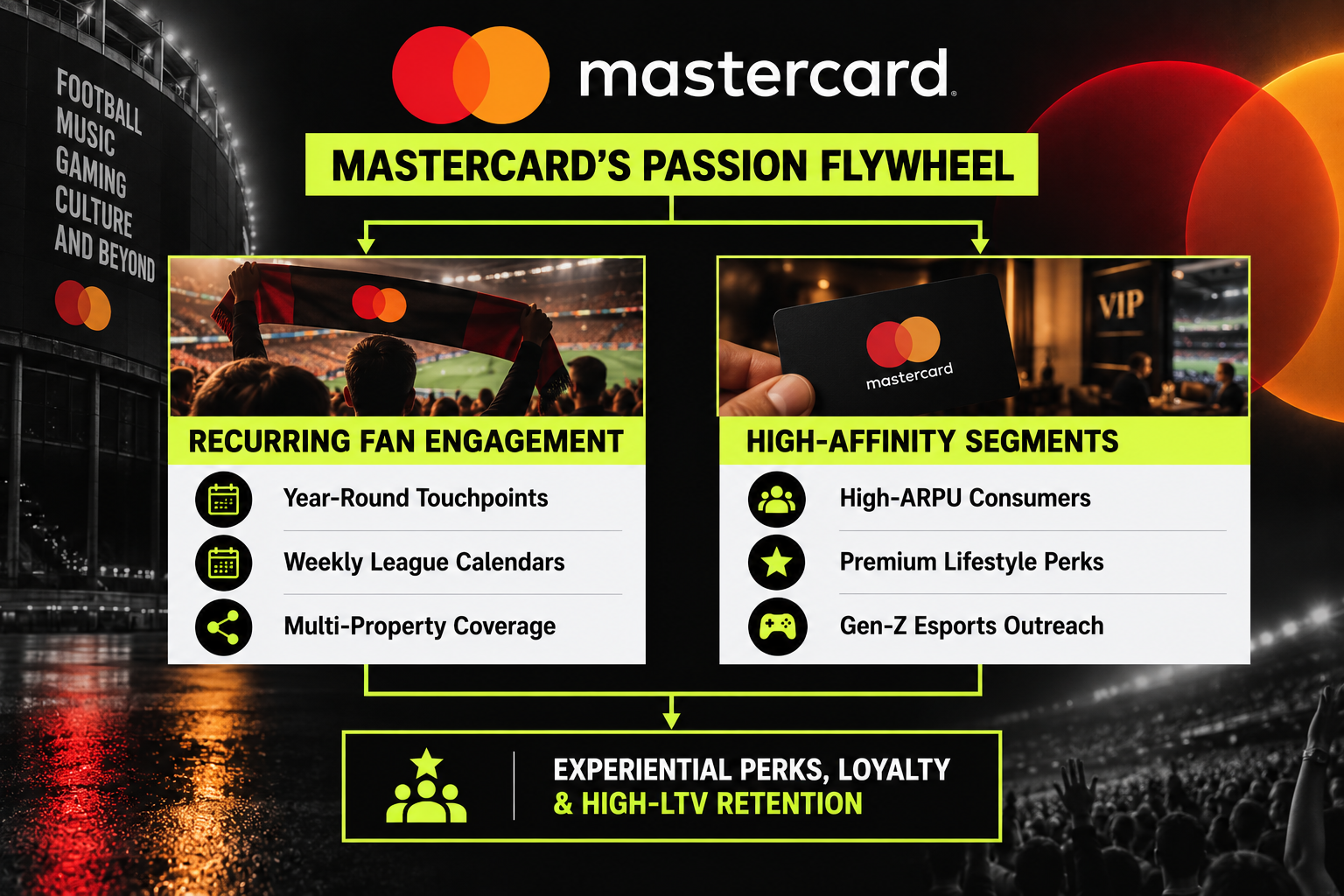
While Visa owns single, massive broadcast moments in time, Mastercard focuses on recurring, lifestyle-driven sports ecosystems.
Instead of chasing quadrennial mega-events, Mastercard builds its sports portfolio around high-frequency, year-round passion points where affluent consumers spend money every weekend. As analyzed in our breakdown onHow Mastercard Built a Commerce Empire in Global Sports, this approach connects directly into Mastercard’s long-running Priceless campaign, converting sports inventory into a powerful customer retention tool.
The Global Portfolio Anchors
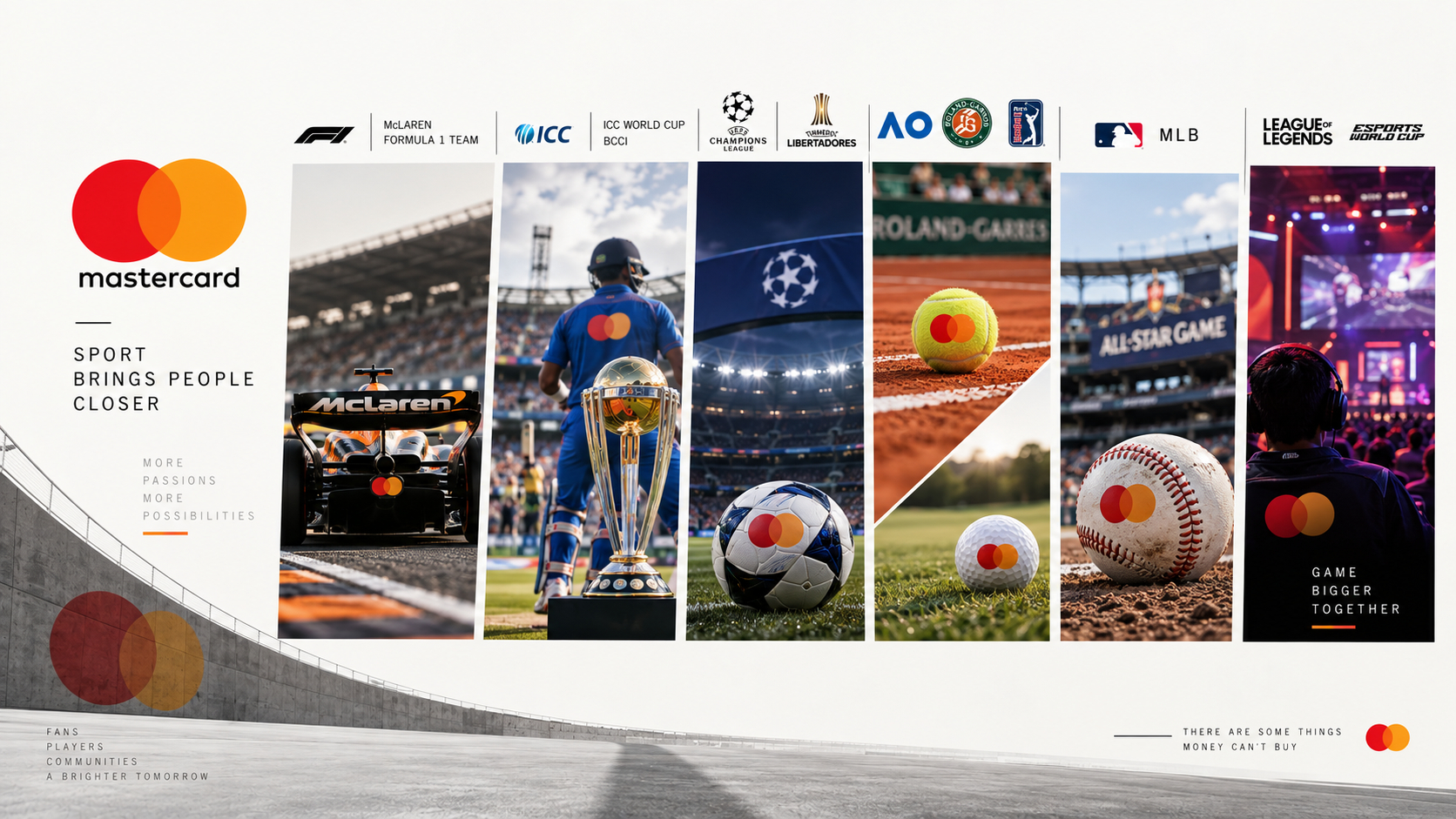
- Motorsport & F1: McLaren Formula 1 Team title partnership (McLaren Mastercard Formula 1 Team) driving VIP hospitality and "Team Priceless" cardholder access (Mastercard & McLaren Announcement).
- Cricket & ICC: ICC World Cup Global Partner status alongside BCCI Title Sponsorship, giving Mastercard unmatched volume capture and brand dominance across South Asia and global cricket markets.
- Global Football: Over 30 years of UEFA Champions League partnership paired with CONMEBOL Libertadores rights, locking down prime-time club football across Europe and Latin America (Mastercard UEFA Partnership Renewal).
- Tennis & Golf: Premier Grand Slam footprint (Roland-Garros and Australian Open) combined with PGA Tour partnerships (Mastercard Sports Portfolio), targeting affluent, high-ARPU demographics with cardholder perks.
- Baseball (MLB): Major League Baseball partnership including presenting status at the MLB All-Star Game and Opening Week "Priceless Drops" to capture North American sports spend.
- Esports: Pioneering entry into gaming with Riot Games' League of Legends Esports (Mastercard LoL Esports Release) and the Esports World Cup, securing direct financial category engagement with Gen Z digital natives.
Strategic ROI: How These Deals Pay Off for Mastercard
Mastercard’s strategy isn’t designed around forced venue adoption; it is engineered to drive premium card acquisition, lower churn, and maximize Lifetime Value (LTV) across high-net-worth customer segments:
- Elevated Premium Card Acquisition: Properties like Formula 1, golf, and Grand Slam tennis cater to demographics with elevated average revenue per user (ARPU). Linking Mastercard directly to these premium lifestyle properties accelerates sign-ups for high-tier card products.
- Sticky Customer Loyalty & Reduced Churn: By leveraging exclusive experiential assets—such as behind-the-scenes McLaren pit walks, player high-five tunnels at Champions League matches, or private PGA coaching clinics—Mastercard gives cardholders a compelling reason to keep Mastercard as their default card in digital wallets.
- Year-Round Transaction Velocity: Rather than waiting for a four-year Olympic or World Cup cycle, Mastercard’s portfolio keeps the brand embedded in weekly consumer routines across European club football, a 24-race F1 calendar, and global golf tours.
- Early Ownership of Future Demographics: Pioneering the financial category entry into League of Legends Esports allowed Mastercard to build early brand affinity and card usage habits among Gen-Z digital natives long before traditional card issuers targeted them.
We have gone deeper into Mastercard's portfolio:
 Marcel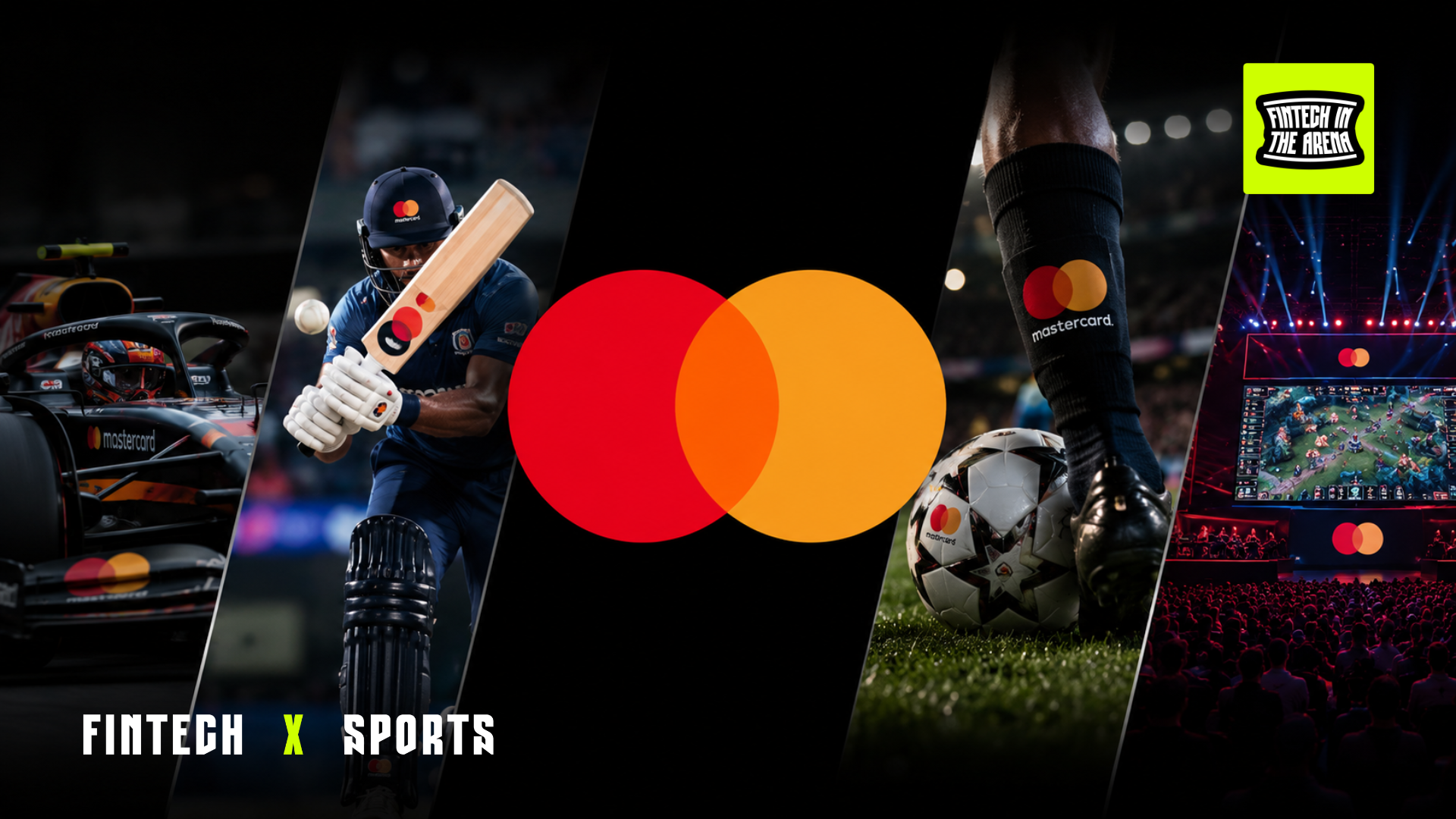
The Intersection of Payments and Sports Capital
Visa wins by owning the moments when the entire world tunes in, embedding its payment infrastructure directly into host venues and driving immediate transaction utility. Mastercard wins by embedding itself into weekly lifestyle habits, turning fan passion into long-term cardholder loyalty and recurring payment volume.
As sports properties continue to digitize their venues, ticketing stacks, and fan experiences, the battle between these two payment titans will remain a definitive case study in how global financial networks turn sports fandom into long-term commercial dominance.
We cover the deals, strategy, and unit economics at the intersection of money and the game. Subscribe to FinTech in the Arena to stay ahead of the sports business curve>>

Comments ()