The Financial Powerhouses Behind Europe at FIFA 2026
From household banking institutions to digital financial brands, Europe's national teams are backed by one of the most diverse financial line-ups in world football.
From household banking institutions to digital financial brands, Europe's national teams are backed by one of the most diverse financial line-ups in world football.
Every football team has a style of play.
Some build patiently from the back. Others press high, attack quickly and embrace chaos. Walk across Europe's football landscape and a similar variety begins to appear away from the pitch. This time, the difference isn't in formations or tactics, but in the financial brands standing alongside the continent's national teams.
Unlike many other regions, Europe doesn't follow a single commercial pattern. Long-established banking institutions share the stage with digital-first financial brands, insurers and regional banking groups, creating a fascinating mix of financial partnerships heading into FIFA 2026. Some relationships have become part of the footballing landscape over decades, while others reflect how the financial sector continues to evolve.
The result is a financial line-up that feels every bit as varied as Europe's football itself.
The established XI
Every squad has its experienced players. Reliable, familiar and trusted.
Europe's financial landscape has plenty of those.
Across the continent, several national teams continue to be associated with financial institutions that have spent generations building their reputation within domestic markets.
- 🇳🇱 Netherlands - ING
- 🇧🇪 Belgium — ING
- 🇫🇷 France — Crédit Agricole
- 🇨🇭 Switzerland — UBS
- 🇦🇹 Austria — Raiffeisen
- 🇧🇦 Bosnia & Herzegovina — Raiffeisen
- 🇪🇸 Spain — MAPFRE
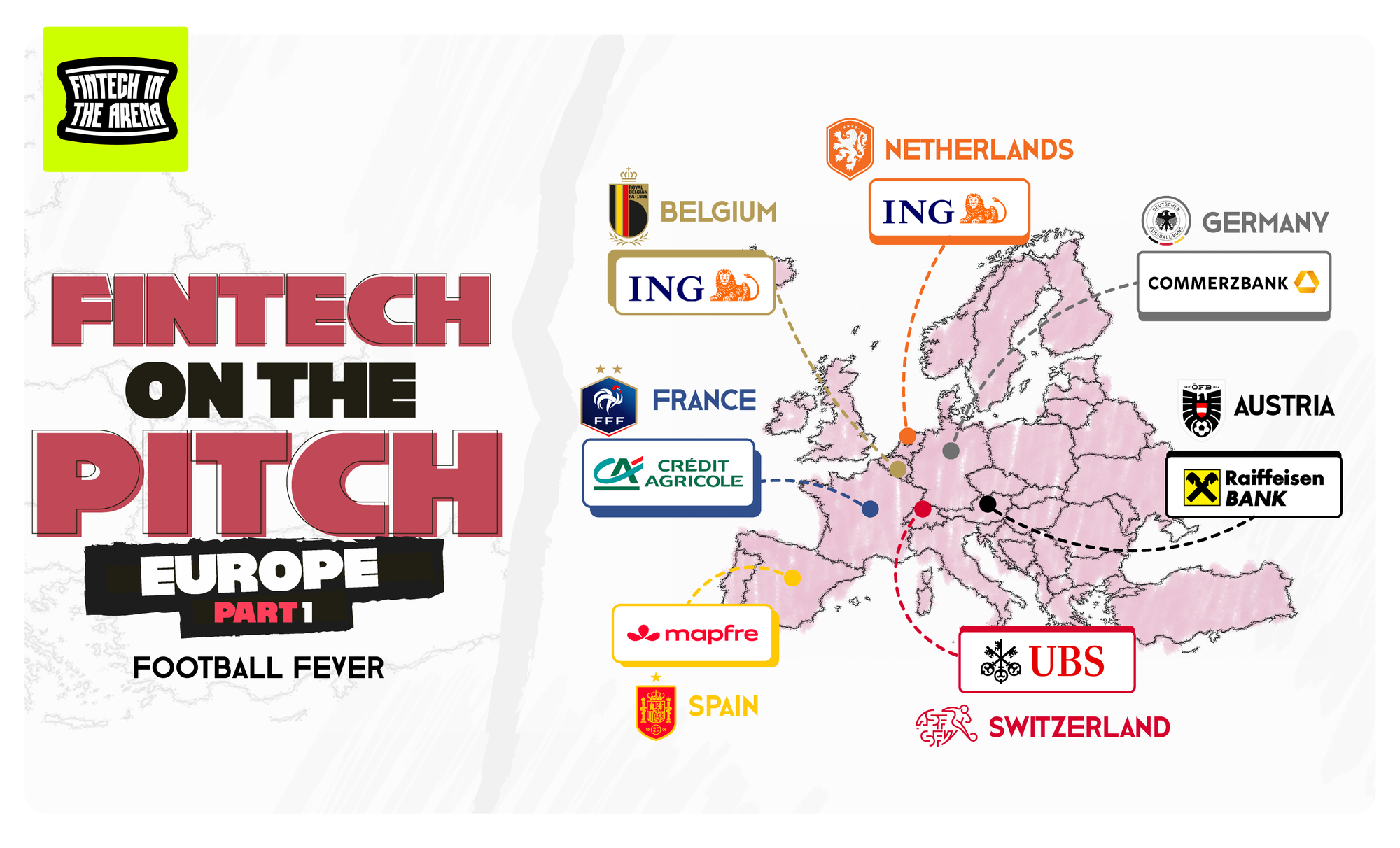
Many of these names barely need an introduction. They already serve millions of customers, hold significant market positions and have become part of everyday life within their respective countries. Their presence alongside national football teams feels natural because both have become woven into national identity over time.
Some pairings are particularly fitting. ING and the famous orange of the Netherlands have shared the spotlight for years. Crédit Agricole has accompanied France through one of its most successful periods in international football, while UBS backing Switzerland reflects a country where finance has long been part of its international identity. MAPFRE's association with Spain sits comfortably alongside one of football's most successful national teams, and Raiffeisen's presence across both Austria and Bosnia & Herzegovina highlights the importance of regional banking groups within European football.
Different countries. Different histories. Yet all represent institutions that have built trust over decades before appearing alongside a national team.
The newer names on the team sheet
Every tournament also introduces fresh faces.
Europe's financial partnerships tell a similar story.
Alongside those long-established institutions are brands representing a newer chapter in financial services or a changing banking landscape.
- 🇩🇪 Germany — Klarna
- 🇬🇧 England — Chase
- 🇵🇹 Portugal — BPI & CaixaBank
- 🇸🇪 Sweden — Swedbank
- 🇭🇷 Croatia — PBZ
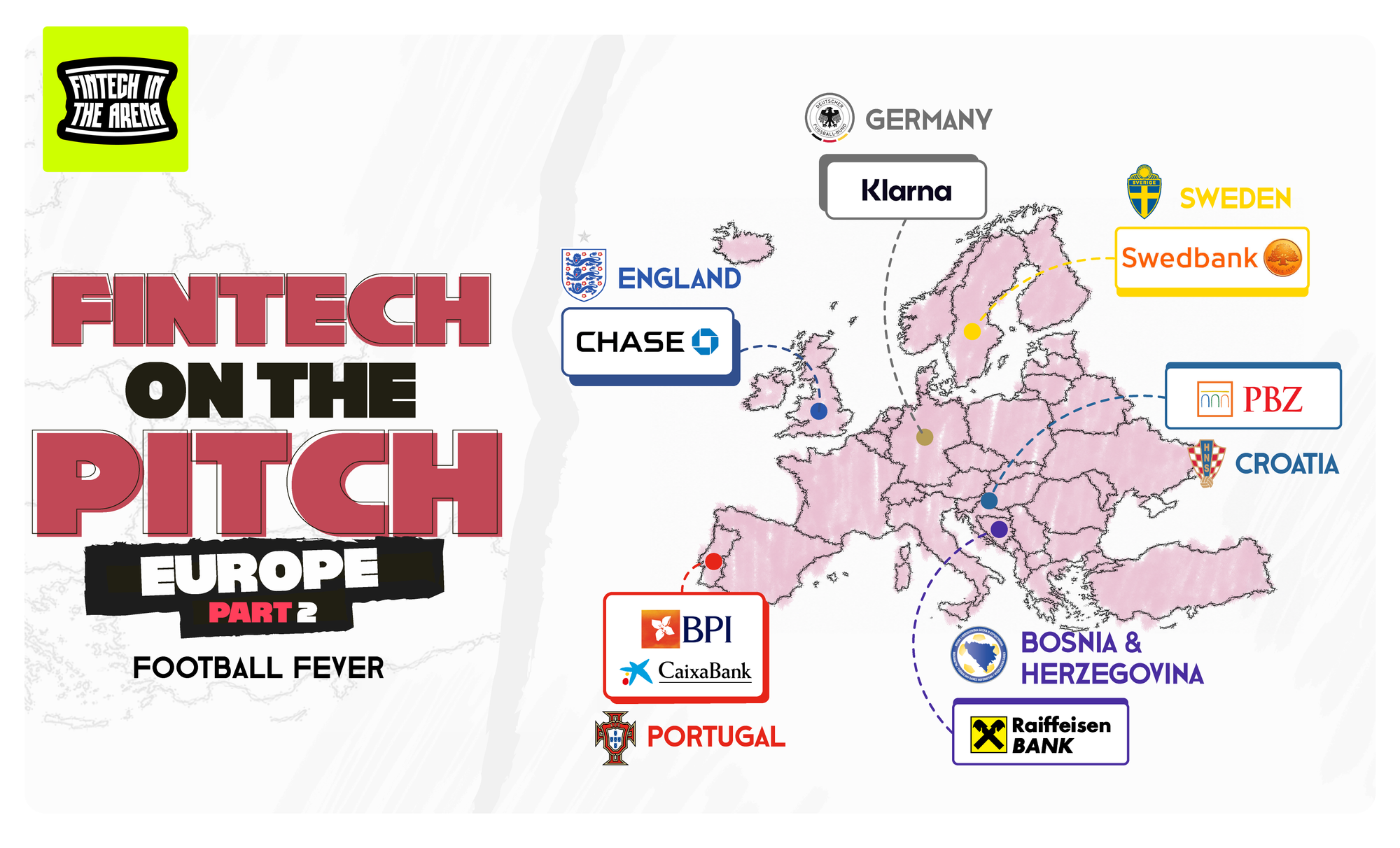
Germany provides one of the clearest examples of that shift. After sixteen years with Commerzbank, the German Football Association welcomed Klarna as a partner, bringing one of Europe's best-known buy now, pay later companies into one of international football's biggest commercial properties. It stands out because it reflects how newer financial brands are increasingly finding a place alongside traditional institutions in the football ecosystem.
Elsewhere, the picture becomes more varied. Chase joins England, one of international football's most watched national teams. Portugal features both BPI and CaixaBank, illustrating how established banking groups continue to evolve through consolidation and international expansion. Swedbank maintains its long-standing relationship with Sweden, while PBZ supports a Croatian side that has built a reputation for punching above its weight on the world's biggest stage.
Rather than following one model, each partnership reflects the priorities and financial landscape of its own market.
One continent, many financial playbooks
Looking across Europe, the most interesting observation may be the absence of a common formula.
Some countries are represented by institutions with histories stretching back more than a century. Others feature brands that have become household names much more recently. Domestic banking champions sit alongside international banking groups, cooperative institutions, insurers and digital financial brands.
Football provides the common ground.
Whether the partnership belongs to a legacy institution or a newer financial player, every brand earns visibility around moments that naturally bring millions of supporters together. Qualification campaigns, tournament summers, dramatic extra-time winners and unforgettable celebrations all become part of the backdrop in which these financial brands appear.
That variety is what makes Europe different. Rather than telling one commercial story, the continent presents a collection of different approaches shaped by local markets, banking traditions and football culture.
Beyond the ninety minutes
The scoreboard will decide who progresses through FIFA 2026.
The commercial landscape tells a different story.
Europe's national teams are surrounded by financial institutions with very different histories, ambitions and business models, yet they all arrive at the same tournament. Some represent names that have been trusted for generations. Others reflect the changing face of modern finance. Together, they create one of the most diverse financial landscapes surrounding international football.
As supporters debate formations, substitutions and title contenders, another line-up continues to develop around the pitch. It may not appear on the matchday programme, but it offers a fascinating glimpse into how finance and football continue to share the world's biggest sporting stage.
Comments ()