
Messi, Mastercard and Brex Walk Into a Bar
Lionel Messi is at the heart of a new Brex and Mastercard activation that gives cardholders access to exclusive football rewards, including the El Amague jersey. It's a play that combines star power, fan engagement and fintech marketing.
When Brex sent out a LinkedIn post saying "the shared passion of soccer brought Sean to the GOAT, Mastercard ambassador, Leo Messi" - half of us read that and went, okay, who is Sean?
Sean is presumably a Brex cardholder. Sean loves football. Sean, through some Mastercard Priceless magic, got to meet Leo Messi. Good for Sean. Genuinely.
But, behind the very wholesome Sean-meets-Messi content, there's a sharp piece of brand architecture that's worth pulling apart - because Brex just did something most fintechs spend years trying to figure out and usually get wrong.
What happened
Brex, the corporate card and spend management platform for startups and high-growth companies, activated a campaign through Mastercard's Priceless platform, built around Leo Messi as a Mastercard ambassador. Cardholders can enter a sweepstake at priceless.com/brexsoccer to win the El Amague jersey - named, brilliantly, after Messi's signature feint. The campaign runs until July 5th. No purchase necessary. Fifty US dollars to enter.
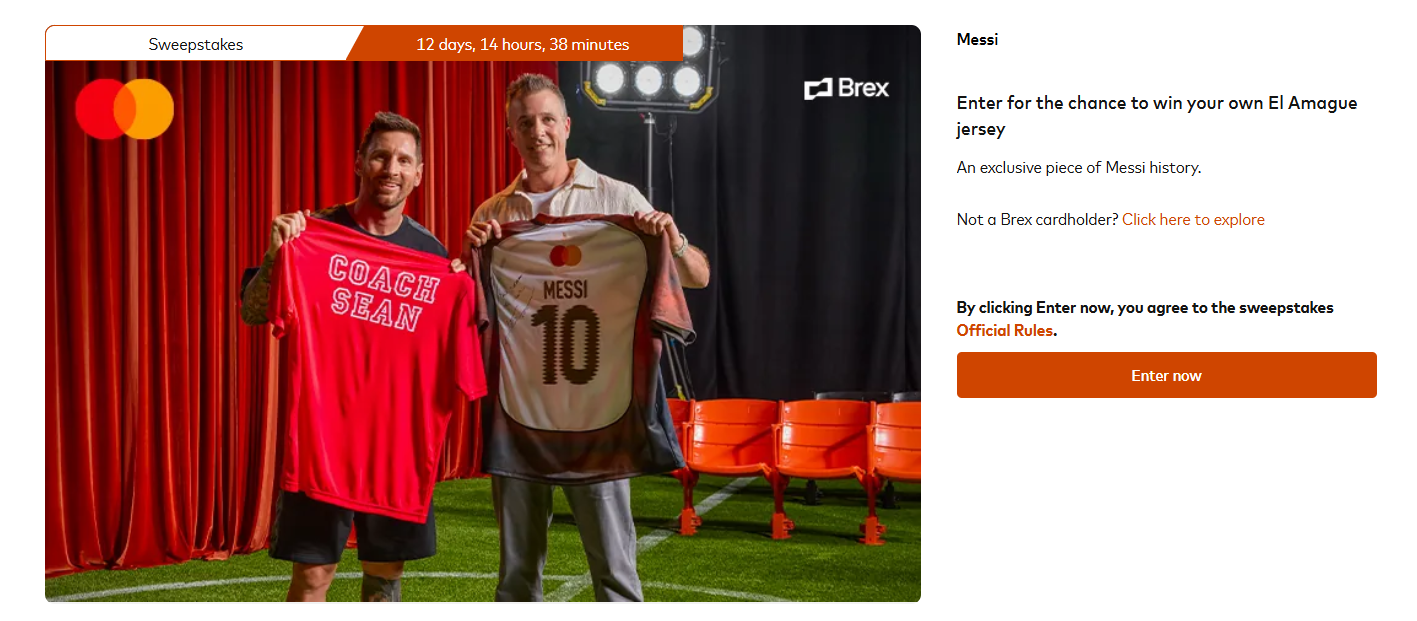
The El Amague detail is doing more work than it looks like. Naming it after the move - the specific, technical, iconic piece of Messi's game - tells you this was briefed by people who actually watch football. That matters.
Fans clock it immediately, and it signals to them that this campaign earned its place in the culture rather than buying a surface-level badge.
The Mastercard layer
Brex cards run on the Mastercard network. So this partnership has real infrastructure underneath the headline, which is what elevates it above a simple celebrity endorsement. Mastercard's Priceless platform has spent years building sports and entertainment activations at scale. Brex plugging into that existing ecosystem means they're not building activation infrastructure from scratch - they're borrowing a machine that already works and attaching their brand to it alongside one of sport's most enduring sponsor names.
That's smart leverage. Why build when you can borrow the rails?
What Brex CEO Pedro Franceschi said,
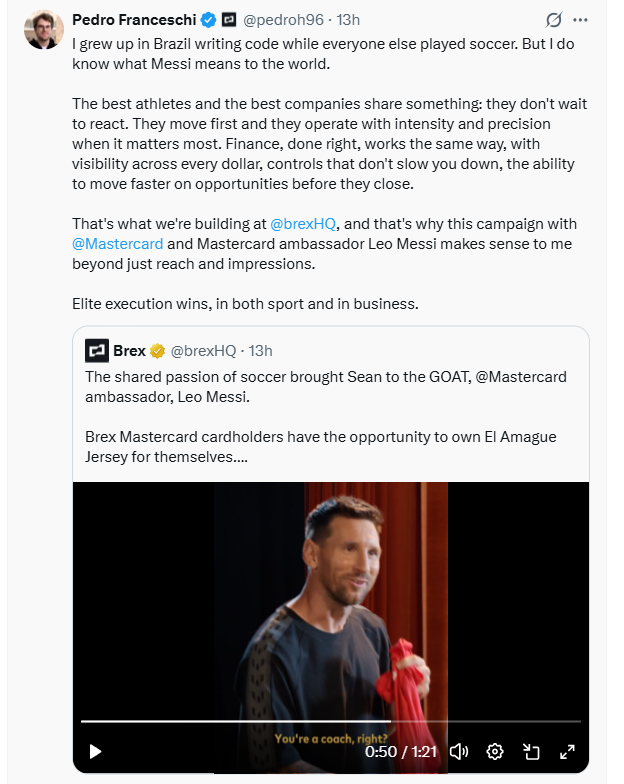
Franceschi wrote his own post about the campaign, and it's worth reading carefully. "I grew up in Brazil writing code while everyone else played soccer. But I do know what Messi means to the world." Then: "The best athletes and the best companies share something - they move first and operate with intensity and precision when it matters most."
That line lands because it's true to him. He's Brazilian. He grew up with football as wallpaper, not religion, and he's honest about that. The result is a founder voice that connects to Messi's cultural weight without overclaiming any personal relationship to the sport. Authenticity in a campaign like this is the difference between an audience leaning in and an audience rolling their eyes.
Compare that to the average fintech sports press release, which reads like it was written by a committee who agreed on everything except what they were trying to say. Franceschi wrote one paragraph. It worked.
Branding play or distribution play
Purely branding. There are no Brex payment rails inside a stadium here, no embedded wallet at a tournament venue, no fan-facing financial product being activated through the World Cup. This is a perception campaign - Brex belongs in the conversation about excellence, and excellence currently has Messi's face.
Brex has never had a product credibility problem. It's a genuine piece of infrastructure for fast-moving companies, and the market knows it. What Brex has historically lacked is mainstream name recognition outside the venture-backed startup world it was built inside.
This campaign is a direct answer to that.
At a moment when football has the world's attention and Messi remains its axis regardless of whether Argentina are in the tournament or not, Brex stepped into that light deliberately.
It's a World Cup window spend. The return is measured in brand recall and cultural association, not same-week cardholder signups. That's the right frame to evaluate it in, and it suggests someone in Brex's marketing function knows the difference between a performance campaign and a brand moment.
The takeaway for fintech
Pick an icon whose values map to your positioning. Let your founder speak to it in their own voice, personally, not through a press office. Use existing distribution infrastructure rather than building your own activation from scratch. Keep the consumer ask simple.
Brex did all four. Sean got to meet Messi. And somewhere in a fintech marketing team, someone is asking their CMO why they're not doing this.
That's usually the sign a campaign worked.
Marcel van Oost has spent eight years connecting the dots across fintech partnerships, capital flows, and commercial strategy through Connecting the Dots in FinTech - one of Europe's most-read fintech intelligence newsletters with 130,000+ subscribers.



Comments ()