
Stripe enters sports sponsorship through the Mercedes F1 deal
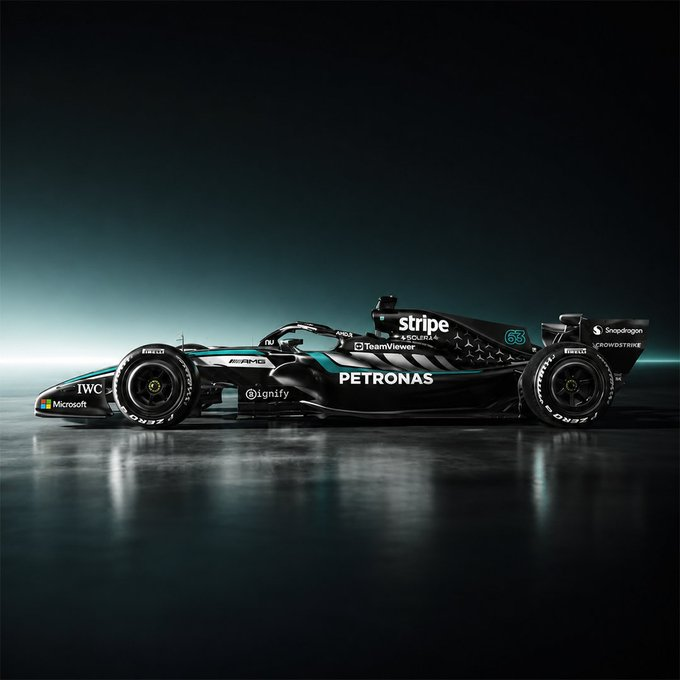
Stripe steps into sport sponsorship for the first time, choosing Mercedes-AMG Petronas as the deal that brings payment infrastructure into the paddock.
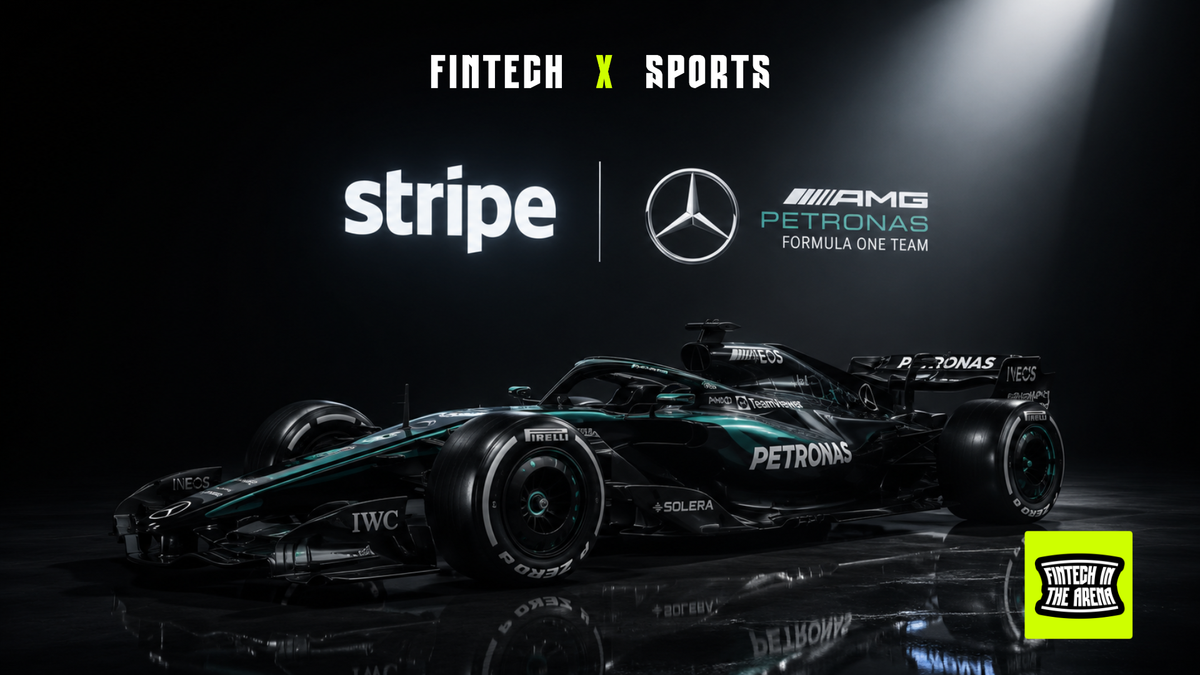
Type: Sponsorship entry | Sport: Formula 1 | Announced: July 2026
Stripe steps into sport sponsorship for the first time, choosing Mercedes-AMG Petronas as the deal that brings payment infrastructure into the paddock.
Stripe moves into sport sponsorship for the first time through a new partnership with Mercedes-AMG Petronas. The deal marks new territory for a company built on payment infrastructure rather than consumer-facing brand campaigns, and it places Stripe inside one of the most visible properties in global sport.
A payments company chooses F1 first
Stripe's core business runs on powering checkout, billing, and payment flows for millions of companies worldwide. Its customers are developers and businesses building on Stripe's rails, not everyday consumers making purchases at a till.
That positioning makes the Mercedes deal worth watching closely.
Infrastructure-first fintech companies have stayed largely absent from sport sponsorship, leaving that territory to consumer fintech brands and crypto platforms chasing retail visibility. Stripe entering through Mercedes gives the rest of that infrastructure category a live reference point for what this kind of deal can look like.
Applying the branding vs distribution lens, Stripe's presence reads as a distribution play. Payment infrastructure companies build value through integration, not logo placement. Mercedes gains a partner whose product sits behind commercial operations: ticketing systems, merchandise checkout, hospitality payments, and other transaction points that run across the team's business. The value Stripe brings to Mercedes has more to do with what runs underneath the operation than what appears on the car.
What stands out in this deal
- Stripe's first-ever sport sponsorship, breaking a pattern where infrastructure fintechs sit out this category entirely
- A distribution-first rationale rather than a branding one, consistent with how B2B payment companies operate
- F1's global, multi-currency commercial footprint gives Stripe's product a natural operational fit
- Sets a reference point other infrastructure providers, banking-as-a-service platforms, and payment processors may follow
- Arrives alongside a second fintech partner at Mercedes, giving the team a stacked fintech bench with two distinct functions
Mercedes builds fintech depth, not a single bet
Stripe's arrival comes alongside Nu (Nubank), which joined Mercedes as an Official Team Partner. Nu brings a different profile entirely: a consumer fintech with more than 127 million customers concentrated in Brazil, Mexico, and Colombia. Between the two deals, Mercedes now holds one partner built for operational infrastructure and one built for consumer scale in a region with deep F1 fandom. FITA will cover the Nu partnership separately in its own right.

Where Audi diverges
Mercedes' approach contrasts directly with Audi's. Audi went all in on a single identity play, bringing in Revolut as title partner to establish immediate brand authority as the team enters the grid this season. Mercedes takes the opposite route, building fintech depth through multiple partners with different functions rather than concentrating its fintech bet into one name. Two teams, two philosophies, same grid. FITA's ongoing Revolut x Audi case study tracks that partnership in full.
The bigger picture
Stripe's entry into F1 sponsorship deserves attention beyond the headline. Infrastructure fintechs have historically treated sport sponsorship as a category built for consumer brands, not for companies whose product operates behind the scenes.
Stripe choosing Mercedes, a team with genuinely complex global commercial operations, suggests that calculus is shifting. If the partnership extends into actual payment infrastructure work across ticketing or hospitality, it becomes a template. If it stays limited to visibility and association, it becomes a signal that even infrastructure fintechs feel pressure to show up in sport, regardless of direct product fit.
Source: SportBusiness
Comments ()