Brazil's Football Fever
Brazil is chasing a sixth World Cup. Fintechs are chasing distribution. From Pix abroad to embedded finance and creator-led media, FIFA World Cup 2026 is becoming a live testing ground for Brazilian fintech strategy. Here's what we're seeing.
Fintech Playbook at FIFA World Cup 2026
Fintech on the Pitch Series
This series decodes every significant FinTech x Sport deal at FIFA World Cup 2026, country by country. What was signed, what was built, and what it signals for the industry.
Today, we are talking about Brazil… ⚽
Before a ball was kicked, Brazil already made its statement.
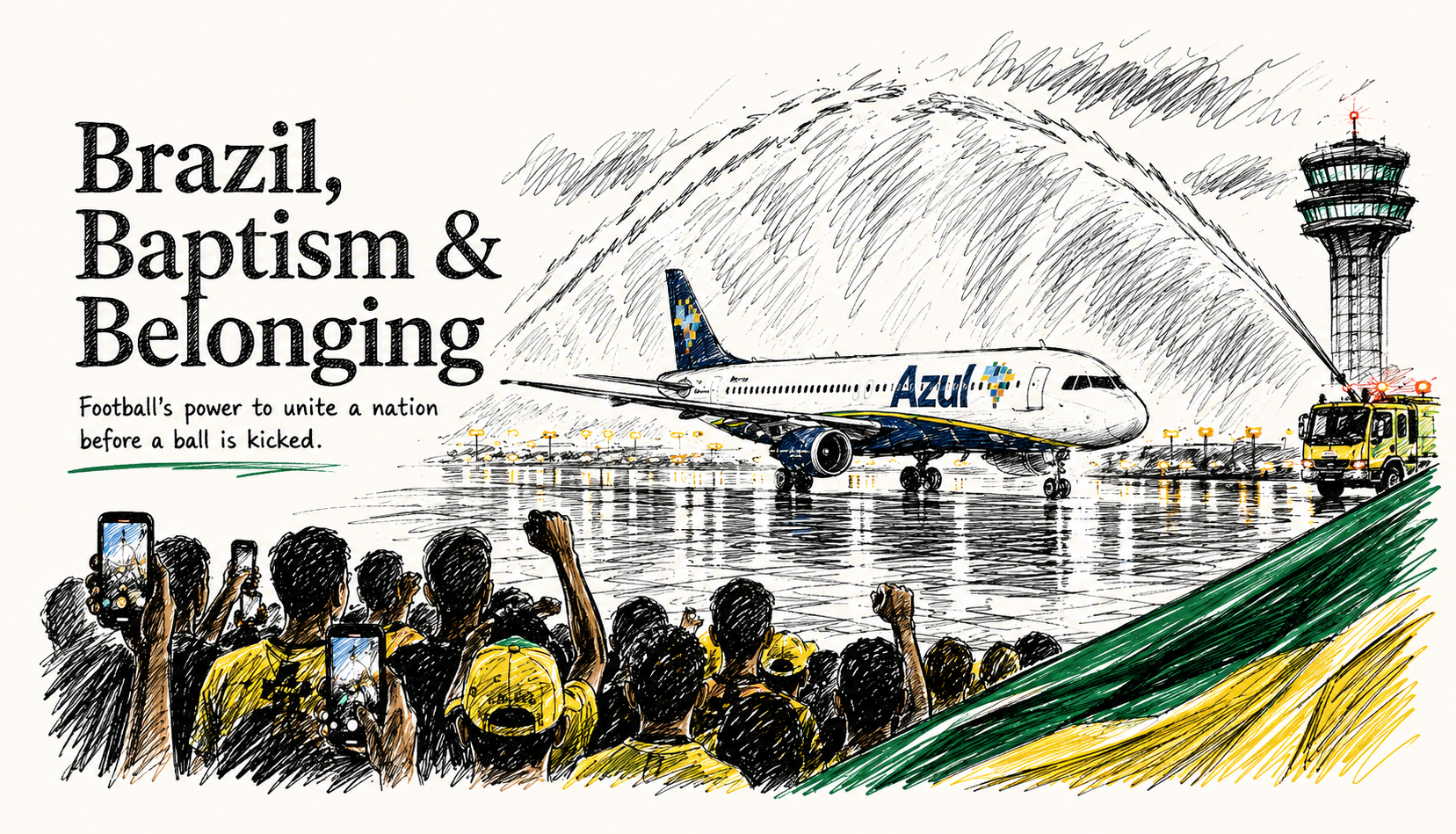
As the Seleção left Rio de Janeiro for the tournament, airport fire engines arched jets of water over the team's aircraft in what Brazilians called a blessing - a ceremonial send-off that tells you more about this market than any sponsorship deck could. Football here is not a leisure activity. It is closer to a collective religion, and the World Cup is its most sacred moment.
That context matters if you are a fintech CMO deciding where to spend. Attaching to Brazil is not a media buy. It is entry into something much older and more emotionally loaded than a sports property.
The commercial picture
Brazil is in Group C at FIFA World Cup 2026, alongside Germany, Mexico, and Japan. They have won five World Cups - more than anyone - and the last one was in 2002. Twenty-four years without a title. Every campaign since has been framed around o Hexa, the sixth star, and that longing is not background noise. It is what makes the Seleção one of the most commercially potent properties in world sport. Brands pay for emotional intensity, and Brazil generates it at scale.
The CBF - Brazil's football federation - is on track to clear R$1 billion in sponsorship revenue this year. Their previous peak was R$567 million, set at the 2022 Qatar World Cup. They are on course to beat that by 75% in a single cycle, which tells you the market has repriced this property significantly.
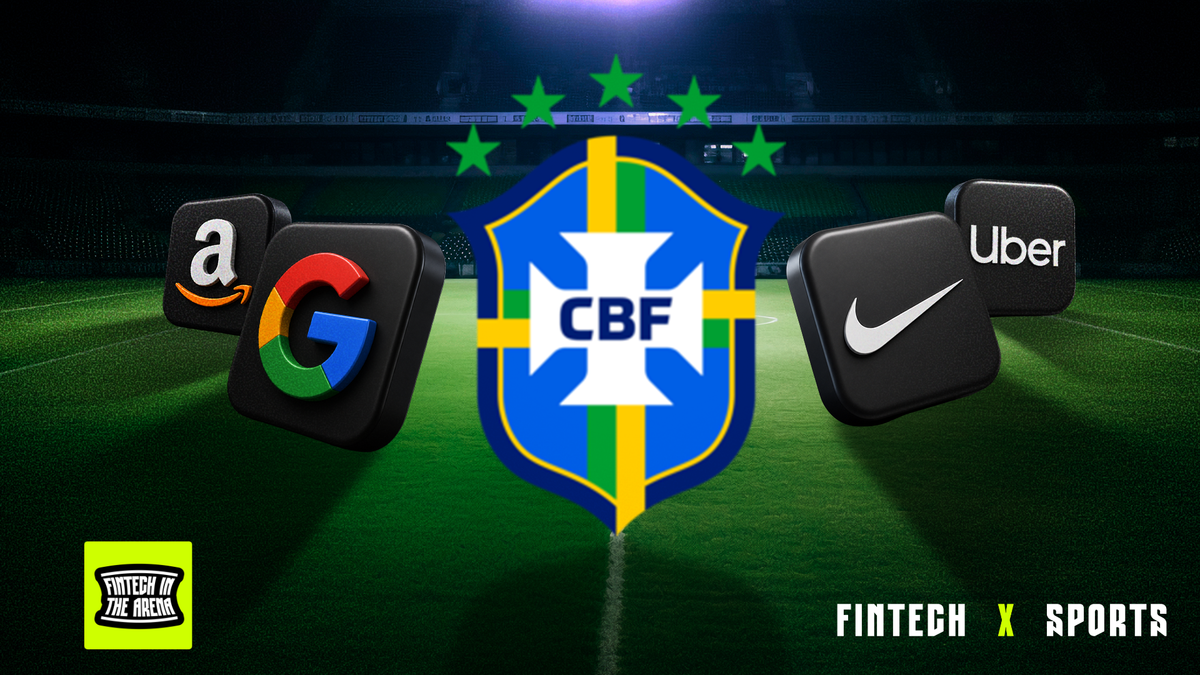
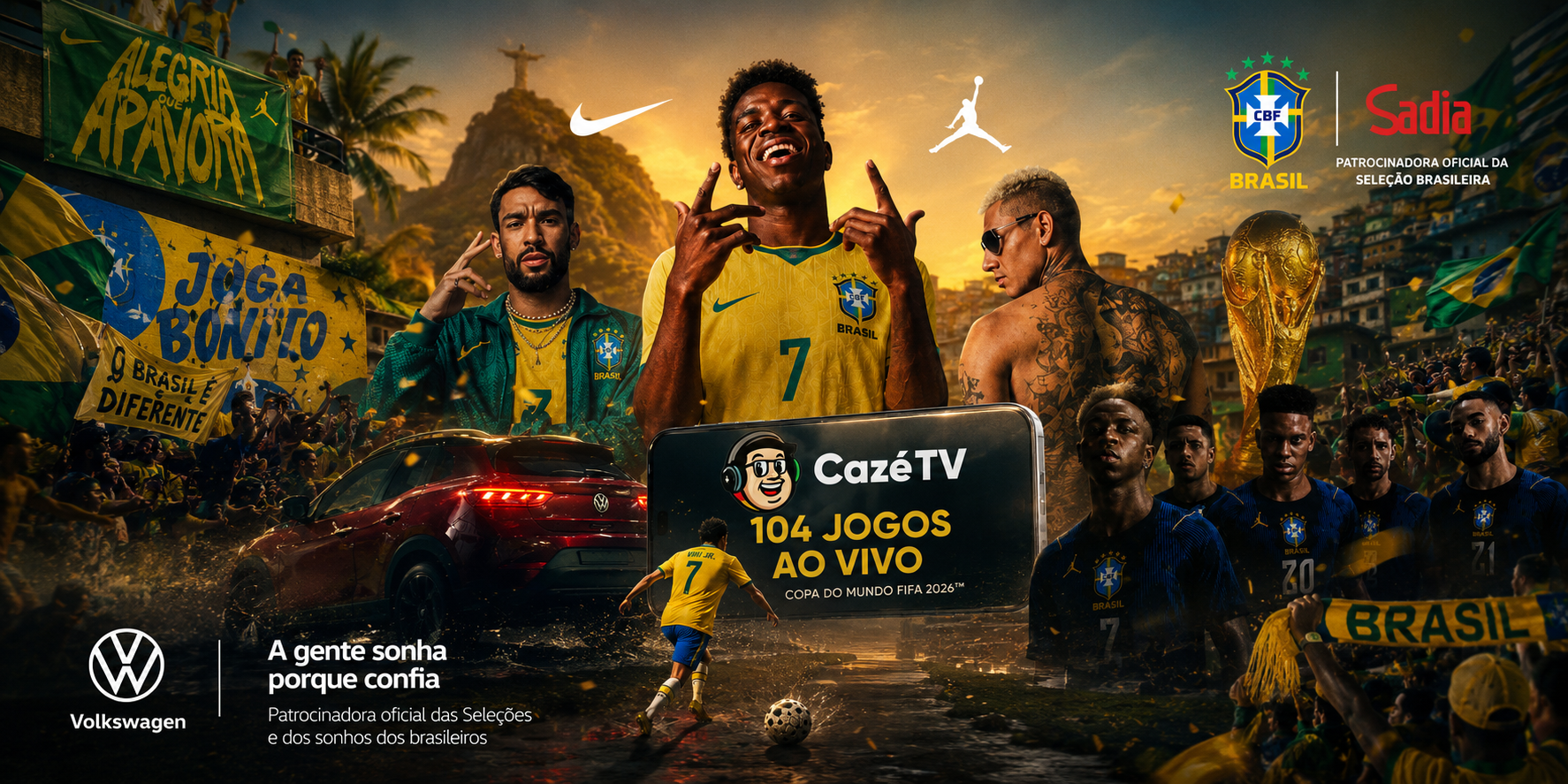
Some of what is driving that: Nike is locked in through 2038 at roughly $100 million per year, the largest national team kit deal ever signed. Jordan Brand appears on the Canarinho for the first time in history - a deliberate move to pull the shirt into a cultural conversation beyond football, into streetwear and global youth identity. Sadia returned as a sponsor after nine years away. Volkswagen came back after twelve. And five of the CBF's twelve partners - Google, Amazon, Uber, iFood, Cimed - hold no jersey rights at all. They are paying purely for content and IP access.
That last point is worth sitting with.
The badge on the shirt used to be the whole product. Increasingly, brands are paying to sit inside the content and audience ecosystem that surrounds a team, not the kit itself. That is a real shift in how federation sponsorships are being valued.
Where fintech fits
The branding layer is well-established. What makes Brazil genuinely interesting for fintech in 2026 is what is happening at the infrastructure level - specifically, what several Brazilian companies are attempting to do with Pix during this tournament.
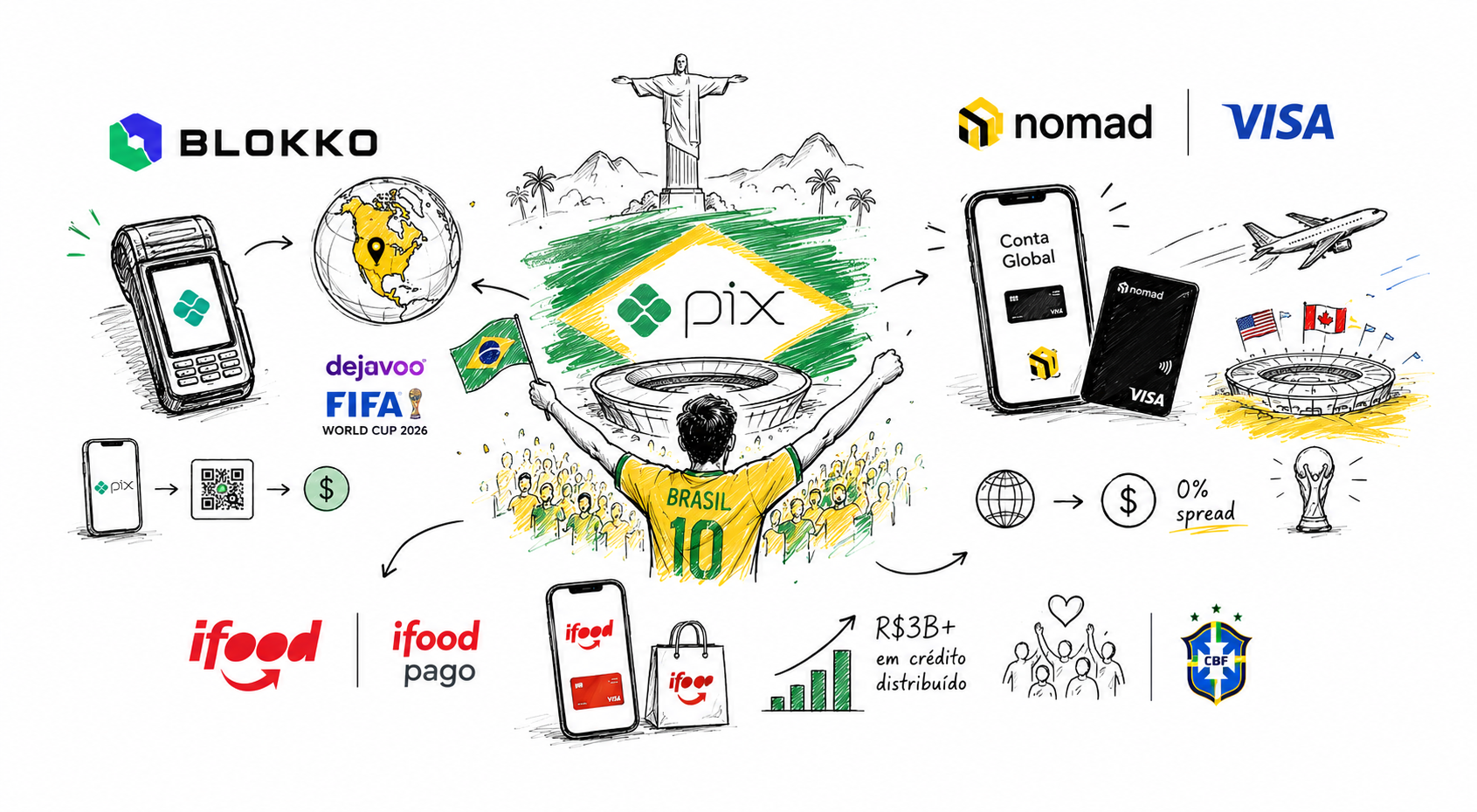
Pix is Brazil's instant payment network, built by the central bank and launched in 2020. It processed over 60 billion transactions in 2024 and has largely replaced cash for domestic payments across a population that adopted mobile-first finance faster than most markets. The problem is that Pix does not travel. A Brazilian fan arriving in the US or Canada is a consumer who thinks in reais and pays by QR code, suddenly in a merchant environment built entirely around Visa and Mastercard.
→ Blokko.io is one of the companies working on that gap, building merchant acceptance infrastructure that lets Pix transactions flow through standard POS devices. Blokko.io has partnered with Dejavoo to integrate Brazil's instant payment system, Pix, into FIFA World Cup 2026 point-of-sale systems. This allows Brazilian tourists and fans to pay in the US and other host countries using Pix or crypto, while merchants receive seamless, real-time settlements in USD.
→ Nomad and Visa are approaching it from the consumer side. Their joint campaign - Você Sem Fronteiras na Copa do Mundo da FIFA 2026 - is running a World Cup sweepstakes as the hook, with the underlying goal of getting more Brazilians to open Nomad's dollar-denominated account before they travel. The product eliminates the 6–8% FX spread that traditional Brazilian banks charge on international card transactions. The World Cup is the moment to acquire. The account is the long-term asset.
→ iFood tells a slightly different story. As an official CBF partner, their federation deal is a branding play - content rights, IP access, team adjacency. But iFood Pago, their financial services arm, passed R$3 billion in total credit distributed since launch, with R$1.3 billion going out between April and December 2025 alone. They are using cultural proximity to the Seleção to build awareness for a financial product, which is a model worth studying if you are thinking about how embedded finance actually scales in a market like Brazil.
One more thing: where the audience is
If you are planning any media activity around Brazil at this tournament, it matters that all 104 FIFA World Cup 2026 matches are being broadcast in Brazil through CazéTV - a creator-led streaming platform built by Casimiro Miguel, who spent years building one of the world's largest sports audiences on Twitch and YouTube before traditional broadcasters took him seriously. CazéTV held Qatar 2022 rights and produced viewership numbers that rivalled national television. For 2026, it has the full tournament.

The audience watching Brazil through CazéTV is younger and more digitally active than any broadcast equivalent, and the commercial model running alongside it is built differently. The five CBF partners paying for content access rather than jersey placement are, at least in part, making a bet on reaching exactly this audience.
Brazil in 2026 is a market where the branding layer is mature and sophisticated, and the payments layer is being actively tested and built in real time. For a fintech brand evaluating a sponsorship decision, the useful question Brazil raises is a simple one: are you looking for a branding surface, or a distribution moment? In 2026, this market is offering both - and it is smart enough to price them separately.
Carlo Ancelotti leads the Seleção for the first time at a World Cup, the first foreign manager to do so in decades. Neymar, at 34 and on his fourth tournament, carries the commercial weight his presence always has. And the whole country is chasing a sixth star it has been waiting over two decades for.
That is the emotional backdrop every fintech brand attached to Brazil is operating inside. It is a significant place to be.
The series continues. Every deal, every country, every angle .
Marcel van Oost has spent eight years connecting the dots across fintech partnerships, capital flows, and commercial strategy through Connecting the Dots in FinTech - one of Europe's most-read fintech intelligence newsletters with 130,000+ subscribers.
Comments ()