How dLocal and Uruguay Are Showing Up at FIFA World Cup 2026
Uruguay may be one of the smallest nations at the World Cup, but Montevideo-born payments giant dLocal is proving global ambition has no size limit. As La Celeste returns to football's biggest stage, dLocal is using the tournament to showcase an emerging-market success story to the world.
Fintech on the Pitch: The FIFA World Cup 2026 Series -
This series decodes every significant FinTech x Sports deal at FIFA World Cup 2026, country by country. What was signed, what was built, and what it signals for the industry.
Eduardo Galeano, the Uruguayan writer who understood football better than almost anyone alive, once wrote that in his country, babies cry 'Goal!' before they ever say "Mamma."
That line is not hyperbole.
Uruguay is a nation of 3.4 million people - smaller than many cities - that has produced two FIFA World Cup titles, fifteen Copa América trophies, and an unshakeable belief that size has nothing to do with what a team can achieve on a pitch. The Uruguayan word for this belief is garra charrúa: the fighting spirit of the Charrúa people, an indigenous warrior heritage that Uruguayans have woven into their footballing identity for over a century.

That longing travels to every tournament. At FIFA World Cup 2026, it travels with a Montevideo-born payments company that has spent ten years doing for cross-border commerce what Uruguay has always done on a football pitch - proving that where you come from is never a ceiling.
A Partnership Ten Years in the Making
dLocal, the cross-border payments unicorn headquartered in Montevideo, announced its partnership with the AUF as the official fintech and payments sponsor of the Uruguayan national football team ahead of the 2026 World Cup. The timing was deliberate. dLocal was founded in 2016, and this partnership marks a decade of operation - a milestone the company chose to celebrate by backing the team that shares its home.
There is something worth sitting with in that alignment. dLocal processes payments across more than 40 emerging markets globally, enabling multinational companies to collect and send money in countries where international payment infrastructure has historically been unreliable or absent. Its entire business is built on the conviction that the markets the rest of the world overlooks are precisely the ones worth understanding deeply. That reads almost like a description of Uruguayan football.
The partnership gives dLocal visibility across AUF's full communications ecosystem - kit presence, official designations, digital channels - and exclusive rights to the fintech and payments sponsorship vertical. No other fintech or payments company can sit in this category alongside the Uruguayan national side. That exclusivity matters enormously in a world where category rights are often diluted by overlapping partnerships. dLocal's AUF partnership hub positions the company as the definitive payments partner of Uruguayan football through the tournament, with campaign activations aimed at reinforcing dLocal's identity as an emerging markets-native infrastructure company - one that grew from the same geography it now represents on the global stage.
The verdict: This is a branding play with a distribution narrative running underneath it. The logo on the shirt is the visible layer. The story being told - that the company powering payments across emerging markets was itself built in an emerging market - is the intellectual layer that gives this partnership its strategic coherence. For a B2B payments company whose sales cycles are long and whose customer conversations often begin with trust and credibility rather than price, associating with a team carrying the weight of garra charrúa is a deliberate character statement.
Why Emerging Markets Fintechs Reach for Sport
dLocal's decision reflects a broader pattern that anyone tracking Fintech x Sport deals will recognise across this World Cup. Cross-border payments companies and emerging markets infrastructure players are using national team sponsorships to build brand authority in a way that replaces the traditional enterprise sales playbook. When you operate in markets where most of your potential enterprise clients are based in New York, London, or Amsterdam, the question of how you build recognition and credibility at scale becomes urgent. A company that sponsors the Uruguayan national football team gets seen in ways that a trade press advertisement or conference booth appearance simply cannot replicate.
dLocal went public on the Nasdaq in 2021, raising $617 million in what was at the time the largest-ever IPO by a Uruguayan company. Its customer base includes global names like Amazon, Netflix, Shopify, and Uber - companies that need to move money in and out of markets like Brazil, Nigeria, India, and Egypt efficiently. The AUF partnership serves both a domestic audience - signalling pride and civic commitment - and an international one, reinforcing the company's position as a serious global infrastructure player at the moment when its home country is on the largest football stage in the world.
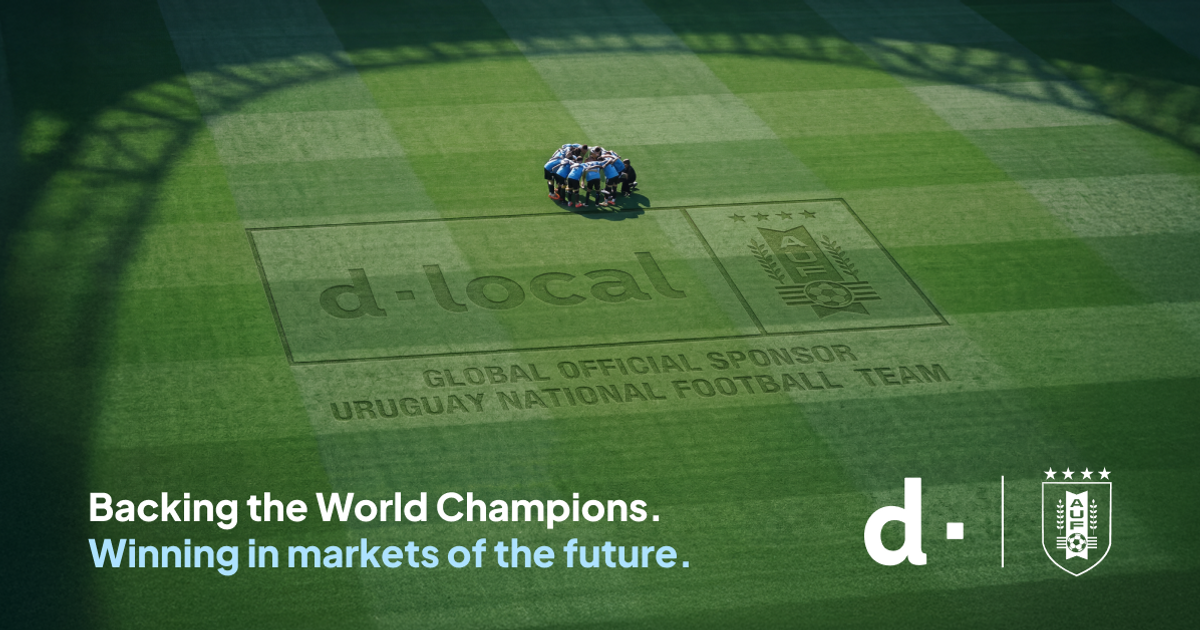
If you follow the thinking of how smart fintech companies approach sponsorship, the logic here holds. The World Cup concentrates global media attention on a country's culture, values, and identity for a month. A Uruguayan company partnering with the Uruguayan national team during that window gets to tell its origin story through football - which is far more powerful than telling it through a LinkedIn campaign or a thought leadership white paper.
The Other Commercial Partnership: Banco República
The Asociación Uruguaya de Fútbol also carries Banco de la República Oriental del Uruguay, the state-owned banking institution, as its official banking and consumer accounts partner. BROU, as it is widely known, is one of the oldest and largest financial institutions in Latin America, and its relationship with the AUF is a long-standing commercial arrangement that covers the traditional banking category.
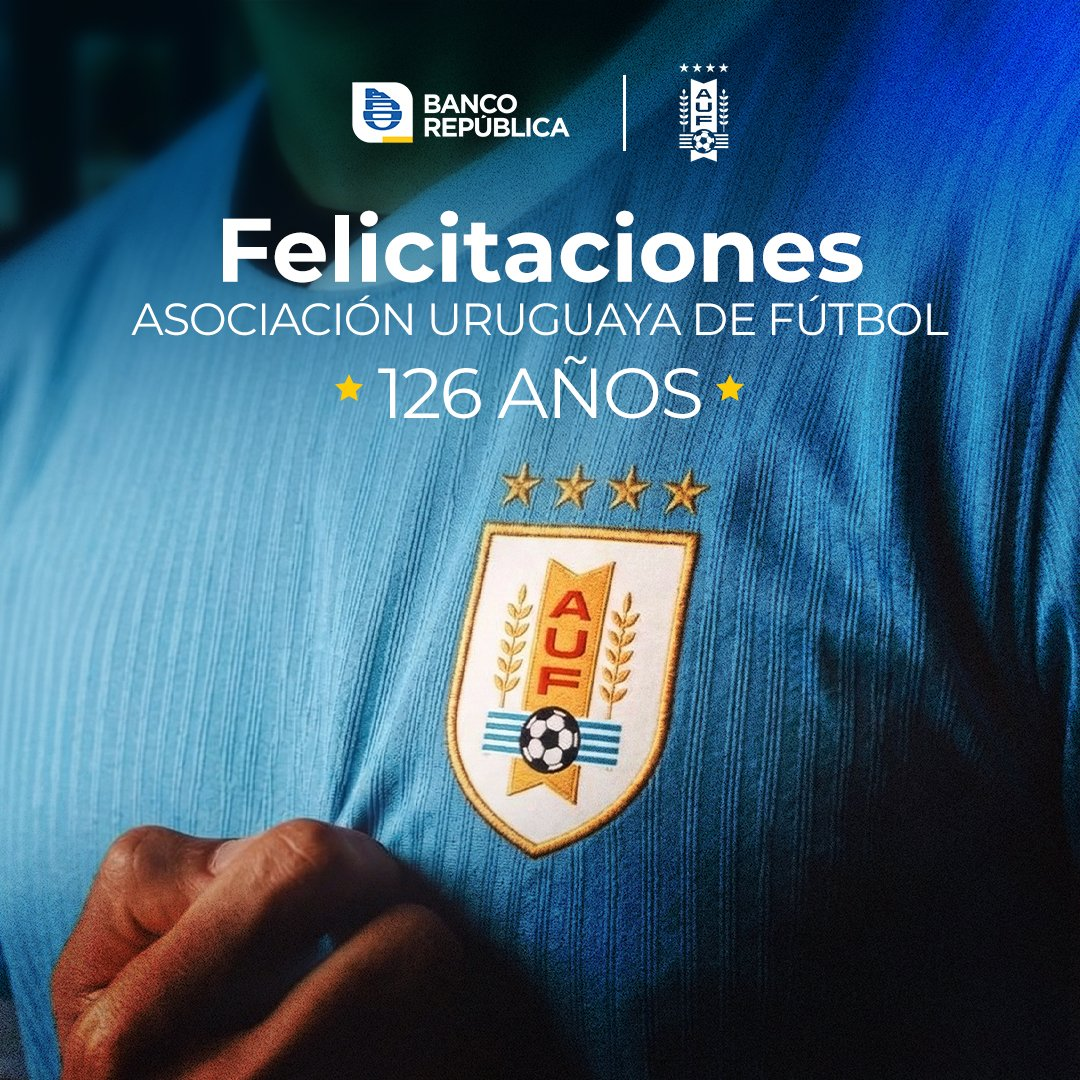
BROU falls outside the scope of what this series analyses - the focus here is on fintech, payments, and digital financial services companies, and state-owned banks occupy a different commercial and strategic category entirely. What is worth noting is that the AUF has made a clean separation between its fintech and payments category, awarded exclusively to dLocal, and its traditional banking category, held by BROU. That structure is increasingly standard in sophisticated sponsorship portfolios and signals that the AUF understands how to segment its commercial inventory. It means dLocal operates without category ambiguity — its identity as the payments and fintech partner of the AUF is uncontested.
La Celeste at the Tournament
Uruguay arrives at World Cup 2026 as one of South America's most reliable tournament sides. The squad carries Marcel Bielsa's fingerprints in its defensive organisation and collective discipline, and the core generation that has carried the team through the past decade - led by Federico Valverde, Darwin Núñez, and Rodrigo Bentancur - enters the tournament at or near the peak of its powers. La Celeste finished in CONMEBOL qualifying on their characteristic terms: grinding results, compact shape, a team that concedes little and makes opponents earn everything.
The World Cup also carries emotional weight beyond the immediate campaign. The 2030 FIFA World Cup centenary will see Uruguay host games as one of the founding nations, and the AUF is managing its commercial relationships in this tournament with one eye on what that anniversary year will require. Building the right sponsor portfolio in 2026 is partly preparation for 2030.
For dLocal, Uruguay's footballing credibility provides exactly the kind of audience it needs - a global following concentrated in emerging markets. Uruguayan football has a diaspora audience across Argentina, Brazil, Spain, and further afield, and the World Cup brings that audience to a single point of attention. The payment infrastructure company with the Montevideo origin story will be visible across all of it.
The series continues. Every deal, every country, every angle .
If you want the same analytical lens applied to the full Fintech x Sport deal landscape - beyond the World Cup and across the year - Marcel van Oost's newsletter Connecting the Dots in FinTech has tracked this intersection for eight years.
Comments ()